
TheDaharMaster

301846

707

15
This is the Saturn V that took us to the moon.
Oct 11, 2025 5:54 PM
TheDaharMaster
301846
707
15
This is the Saturn V that took us to the moon.
OldSchoolHippie1
I had an old Ford like this too!
Junkman9096
Similar but on a larger scale. https://www.youtube.com/watch?v=su9EVeHqizY
solutionorppt
Reminds me of my 1972 LTD.
cousteau
So in the first stage they mix blue with red, in the second state they mix yellow with blue, and it's so good it takes its hat off, and in the third stage they mix yellow with blue, but smaller.
RanOutofWit
While I understand the comparative economics of multi-stage rockets with reusable sections vs SSTO, I really wish they had finished the X-33. The potential of Aerospikes for orbital lift just hasn't been really used yet, although we are getting back to it.
ByThePowerOfSCIENCE
At this point so many initiatives have tried and fail to produce a full-scale aerospike that it looks like a rite of passage. Which doesn't mean that it's never going to happen.
This is one recent scale test: https://www.esa.int/ESA_Multimedia/Videos/2025/04/Pangea_s_methalox_aerospike_engine_first_in_the_world
DreamPhreak
why dont they just move the land closer to space so its not so far away
khora
Ah, common misconception. It's about the speed, not the distance. The trick is going so fast sideways so that when you fall back you miss the earth.
Ghlargh
If you could start further up you would have a little bit less air drag to fight, if you could start a LOT further up you would also have less gravity to fight... If you could start a LOT LOT further away from the surface you would need less velocity to escape.
alcamar
I have a Metal Earth model on my desk of the Saturn 5 right now.
TheDaharMaster
I have the Lego version. My dumb ass left it in the living room and it’s turning yellow
usnerd55
I worked for Rocketdyne, and we built these engines!
Blackfinity
Crazy that all that came back intact was the itty-bitty cone-shaped command module at the very top of the stack.
ByThePowerOfSCIENCE
Not even that, if "back" is dry land or even the deck of a ship.
The stack existed only to fling three little meatbags and the things they needed to stay alive at least part of the way. Once each part did its job it was dead weight.
ChipDontDoIt
Our forefathers used to ride those babies for miles.
ScootyPuffSr
To credit the original artist, this is Hazegrayart on YouTube; they make amazing videos about many rocket concepts that never actually got built.
Nukls
Did the Old Ford also get you to Space?
BiggRanger
Only when we hotboxed it!
Nukls
Gnarly
Fuckweasel
What is "hotboxing?"
MuffinProof
Dutch oven
ITLKSEZ
https://media1.giphy.com/media/v1.Y2lkPTY1YjkxZmJlNGdrcTZ3c3pram56eHFsbm5oY2h0Mm03YXdmZzNxOWJlaTB0bWcxbSZlcD12MV9naWZzX3NlYXJjaCZjdD1n/tsCy33LwAQ20o/giphy.mp4
Fuckweasel
Lol, thanks.
PumpkinDriver5
Closing the windows and smoking weed, so all the smoke stays in the car and you inhale whether you want to or not.
Kills the resale value of the car.
DdCno1
Doesn't Ozone get rid of it?
PumpkinDriver5
I’ve never tried ozone with weed smoke.
I know it supposedly works for tobacco but I swear it only gets rid of like 98% of it and I can still smell it afterwards. Maybe I’m sensitive, maybe it’s psychosomatic.
You still have to clean the sticky smoker gunk off manually though. (Tar?)
chackstar
Someone’s been watching Technology Connections :)
pachyderm
Very cool animation
Canigetbannedagain2
So I know there's the fuel and oxidizer, but the first stage is red and the others yellow... So, may I ask the rocketologist here, are they different fuels? Thanks.
TK421isAFK
Red is kerosene, light blue is liquid oxygen, and yellow is liquid hydrogen. The first stage burned 770,000 liters of kerosene and 1/2
TK421isAFK
318,000 liters of liquid oxygen. The second stage burned 260,000 liters liquid hydrogen and 80,000 liters of liquid oxygen. The entire 2/3
TK421isAFK
vehicle weighed just over 2.8 million kilograms, but almost 95% of that was just the fuel - the empty rocket weighed 140,000kg. The 3/4
TK421isAFK
total vehicle had fuel economy of 3.4 *centimeters* per liter of fuel. 4/4
Septcanmat
Is that including the entire flight path (to the moon and back) or just the stages to get to orbit?
InsertUnimaginativeUsernameHere
First staged used Kerosene. The other two used Hydrogen.
Canigetbannedagain2
Cool thanks, I was wondering that.
Zetor
Feels like my old V6 Pajero
MichaelHatch
Cool!
ziggystardust7
Why was it like a multi-stage burn like that, instead of just 1 giant fuel tank? Just so it could keep getting lighter as it went higher up?
OdinYggd
2 stage rockets are common. Big heavy engines tuned for performance at sea level for liftoff, and fuel tanks for them. Then once that drops, engines tuned for near-vacuum with their own fuel tanks.
Doing it this way you not only get more efficient engines at altitude, but get rid of the dead weight of the empty tanks and don't need as many engines to keep going.
Saturn V was 3 stage, and a size rivalled only by the N1 until SpaceX Starship came along. Which has far more efficient engines.
WellAckchually
That's a big part of it, also rocket engines are tuned to work at a certain atmospheric pressure and an engine that's efficient at sea level will be very inefficient in vacuum. It's a balance because more stages can add efficiencies but at some point you're spending your whole budget, both monetary and mass-wise, on staging equipment and engines.
WellAckchually
There's also tradeoffs in power output vs fuel efficiency. I would use the metaphor of pushing a kid on the swing-set. The first stage is drawing the kid back to get them started, the second stage is giving them little pushes to get up to speed and the last stage is the little pats that keep them going. If you kept up that initial level of output you'd burn out real fast
Psurprise
It's amazing they remembered to account for the fuel that will be needed to get the other fuel up that high
TheOhioGuy
That was cool.
GoodGuyGonzo
TK421isAFK
Once I realized those were elephants representing the weight of fuel being expended, that really helped illustrate the volume of it.
InsertUnimaginativeUsernameHere
My God! Those poor elephants!
Colopty
Frankly it's amazing they're getting away with such blatant animal abuse.
80sHairMetalFan
This is more realistic.
Turboslacker
Gallons per mile
Loctavius
That's the M1 Abrahms. They guzzle fuel.
taco81
It’s aviation. We go by pounds or liters per hour
Colopty
In this case tons per minute.
DdCno1
Per second.
prfesser
First stage burned 15 TONS of propellant (modified kerosene and LOX) every SECOND.
reichtwinglunatic
fuck yeah, thats pretty metal
ItsaBeemer
Gallons per second.
kickahippie
Tons per mile
khora
liters per delta-v
TK421isAFK
It literally moved 3.42 cm per liter of fuel burned. That's 5.1 inches per gallon...lol
dghughes
Hundreds of tons per mile.
IhopeUgetwhatUvoted4
0.25 mile per gallon or 3.97 gallons per mile.
PostalHeathen
I didn't know they made that one out of glass.
charondaboatman
Well, SpaceX……
ByThePowerOfSCIENCE
Starship is Coyote-level experimental. Falcon 9 is stupidly reliable, especially considering the launch frequency.
TheDaharMaster
BenderSaysNeat
How else would they be able to tell how much burn water is left?
Level21Magikarp
They had better not throw stones.
DanCutter
Me neither! And that camerperson deserves a gold medal! 😆
Boatsntoes
Transparent aluminum
13579rocket
Wasn’t there a movie that had “transparent aluminum” as a mcguffin or something like that?
PostalHeathen
It's a Star Trek thing. Windows on the ships are supposed to be made from it. It was used as a plot point in Star Trek IV. We got a funny scene out of it. https://media0.giphy.com/media/v1.Y2lkPWE1NzM3M2U1MHFudDdpYno5cnl2cHgxdTI3dnZjdzBkamRscTFkdTkzZzNoMG1kbyZlcD12MV9naWZzX3NlYXJjaCZjdD1n/3o7btVRbshbbaC8Ygg/200w.webp
Evenmoreuselessname
https://www.tweaktown.com/news/108146/ai-helps-turn-a-gaming-mouses-high-performance-optical-sensor-into-a-microphone/index.html
InitHello
MuffinProof
Why was the tip popped off?
OdinYggd
The idea with the Launch Escape System was an entire small rocket on the nose of the big rocket so that if the big rocket failed it would lift the crew capsule only to an altitude high enough for the parachutes to open. Once above that altitude on the big rocket LES jettison took place, removing the LES rocket itself and the protective cowling under it.
MuffinProof
So, once it was above the height for it to be needed in an emergency it got yeeted?
OdinYggd
Yep. Once the 2nd stage was burning stable and the altitude high enough the capsule could wrench itself free and return unassisted, they'd jettison the LES to reduce weight.
In the Apollo 13 movie, at 4:15 in this clip of the launch https://www.youtube.com/watch?v=xP_PoLI_FFY
ByThePowerOfSCIENCE
*yeettisoned, because past that point they're dead weight
gman003
A single Saturn V second stage burned more liquid hydrogen in its six-minute burn, than the entire world had produced to date at the start of the Apollo program. LH2 was known to be a very high-efficiency fuel for rockets, but figuring out how to produce and transport it by the ton was a problem the US had to solve to make the Saturn work. New rail tankers had to be designed to handle the ultra-cryogenic liquid.
astrangehop
Yeah, but GM stopped making them in 2010
gman003
The USSR was slow to build up similar capacity. Their N1 rocket used less-efficient but better-available kerosene in all three stages, where Saturn only used it in the first stage. Despite the N1 being larger, it was only specced to carry two astronauts, only one of whom would be on the lander, due to the less efficient fuel. The N1 program was scrapped after four explosive failures. They later used LH2 on the Energia rocket, itself swiftly scrapped.
dohcohv
The N1 was the V16 chainsaw Lada of rockets.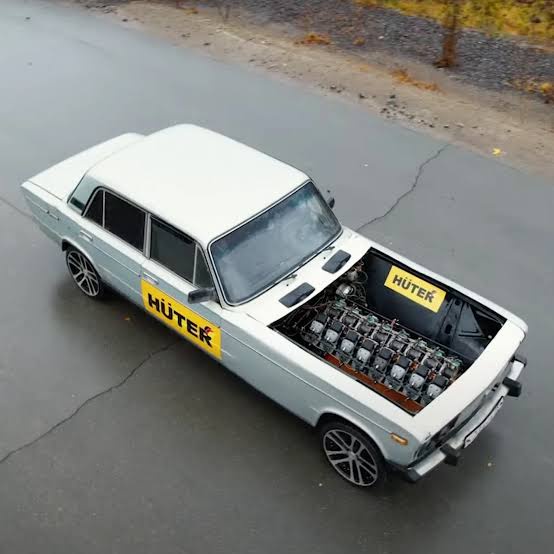
gman003
The N1 used dozens of relatively small engines because of another thing they never quite mastered - single large combustion chambers, that don't blow themselves up. But on the flipside, the US only recently got a handle on how to make an engine preburner run oxygen-rich without burning itself up, something that made the Space Shuttle engines very finicky, and they had a lead on more advanced engine cycles early in the Space Race.
gman003
Hydrogen became the de-facto standard fuel for US and related rocket programs. Shuttle, Delta IV, Japan's H-II and ESA's Ariane all used it paired with solid boosters. Lately, however, liquid methane has become preferred (New Glenn, Vulcan, Starship) bc it has almost as good an impulse as LH2, but the higher density and boiling point means the tanks can be smaller and lighter, enabling better overall performance. It being cheaper and safer to handle is another nice plus.
DocNitro
Also helps that it is not the smallest molecule in the universe, and thus needing to be trapped by a 'maze' to keep it from slowly escaping through the molecules that make up the tank's material.
ktp57
Super interesting. Thanks for sharing!
gman003
FYI this video is not real time. It's sped up by ~10x. The first stage burn in reality took 2.5 minutes. That's still *very* fast to burn through two thousand tons of propellant. Those engines were *hungry*.
OmnesMundiLardum
* "thirsty" seeing as the propellants were fluids
MisterLemons
Seeing the Saturn V on its side at Kennedy Space Center is otherworldly. Each of the F1 engines is large enough to cover a car, and there's five of them.
The first stage tank is absolutely ridiculous. You could literally make a LARGE house out of it. I cannot express the sheer volume just by saying "it's 33 feet in diameter", you need to understand that a two story house can fit in there from foundation to chimney... two of them, side by side, and that's just the first stage.
HavelTh3Rock
I was going to say, that is literal TONS of fuel it's burning through in a matter of minutes.
joshuasplinth
I love when people know stuff like this.
Leonon
One way to tell it's sped up is the "tower clear" call happens way after the tower is cleared in the video.
ByThePowerOfSCIENCE
Extra note: You _want_ to burn up fuel as fast as possible, because that's mass that you're accelerating and lifting.
Ideally you'd burn it all it in one big 'splosion (which is equivalent to putting your payload in a cannon), but then you'd break the squishy breaky things you want to put in space.
AShartInTheWind
Fun Fact: The US government actually tried to build a canon to launch a pod into orbit using a small nuclear bomb as the propellant.
It didn't work.
ByThePowerOfSCIENCE
Source? Space guns were attempted, most notably HARP (the main guy would later try to build Saddam a gun that would reach Israel), but those used conventional chemical propellants.
AShartInTheWind
I knew a guy who was a physicist/chemist back in the 50s-60s who was part of a project somewhere in Southern California. They told the military it wouldn't work, but they wanted an attempt anyways.
There's a barrel drilled into the side of a mountain pointed out toward the Pacific Ocean and they would use nukes about the size of a briefcase. I have no idea what the project was called or even how many times it was attempted.
ByThePowerOfSCIENCE
yep, sounds like the early Atomic Age

The device would vaporize a bit of whatever's next to it so my first thought about firing it more than once is it would sit in a "chamber" separate from the barrel, surrounded with _something_ consumable that would provide gas. But then how do you handle the byproducts?
It makes nuclear jet engines look like a good idea by comparison
sharK11
Can't go tooo fast we're seventy percent fluids and twenty five prevent goo.
ByThePowerOfSCIENCE
"No more than 20 g please" "Water and oxygen and nutrients please"
We're puny meatbags.
Septcanmat
Yes and no. There is atmospheric drag to consider; if you accelerate too much too quickly then you wind up with substantially more drag than you might otherwise. At a certain point, all the fuel you’re burning is just going to counteract drag. Obviously it all depends on your vehicle design, the stages, the fuel type, the engine, etc. but basically you actually want to get to orbit by spending as little fuel as possible, not as FAST as possible, and those are very different strategies.
ByThePowerOfSCIENCE
That's why I said _ideally_, looking only at the rocket equation that punishes you for not burning fuel faster with having to carry more fuel. I should've mentioned drag too.
Septcanmat
Fair enough. Your notion of the ideal rocket is definitely true from orbital manoeuvres, where ideally you’d he able to accomplish your full delta-v a single instant, but of course in practice you have to burn the engine for some amount of time and so your application of delta-v gets smeared out and it means you don’t get the pure ideal manoeuvre you wanted.
ByThePowerOfSCIENCE
Yes, if you could burn all your fuel on launch instead of hauling it part of the way then efficiency wouldn't matter - kerosene is cheap

then there's the Jules Verne approach, but precious cargo is breaky / squishy
CallMeCourierSix
What bothers me is the yellow/blue ratio changing between first and second stage. In the 1st stage, yellow is used at half the rate of blue (maybe less?). In the second stage, the blue is now used at half the rate of yellow. The colors would indicate they're the same chemical compound, so how do they flip the mixture and still get a good reaction?
CallMeCourierSix
MY MISTAKE. I thought the larger tank of yellow was draining (very slowly) during stage 1. I was wrong. It doesn't change until stage 2.
random360
The answer is you may be color blind. The first stage is blue and red while the second and third are blue and yellow. To my eyes the color difference is very stark and cannot be confused.
CallMeCourierSix
My bad. I'm not color blind, but I swear I saw the larger tank of yellow slowly draining during stage 1. I was wrong. It doesn't change level until stage 2.
nuxi7
The first stage is red+blue.
The F-1 engines of the first stage nurned LOX and RP-1.
The J-2 engines of the second and third stages burn LOX and LH2.
clarkWhogotsanity
The mix ratios are probably different as well
gman003
Indeed. Compared to kerosene, hydrogen requires both a more fuel-heavy ratio to be stoichiometric, benefits efficiency from being *above* stoichiometric, and is extremely low density so a given mass of it occupies far more volume. By volume, the first stage was ~3:2 fuel:oxidizer, second stage was over 3:1. Later hydrolox rockets have moved to 7:2 or even higher.
BrdCdn
Absolutely. Entirely different fuels with different properties and advantages.
JustSomePersonThere
I would love to see the original animation in its entirety — but every search I did came up with a shitty clip.
Anyone know where I can find the original?
ByThePowerOfSCIENCE
https://youtube.com/watch?v=su9EVeHqizY
JustSomePersonThere
Thank you so much!
PeterTried
Thanks. What irks me here is the lack of acceleration of the space shuttle. On the first launch, still with white main tank, the speed of that thing, compared to Apollo, was something that struck me.
JustSomePersonThere
Yeah, it’s not perfect. Still cool to have though!