Apr 4, 2015 2:32 PM
arcgap
455
395
9
thez0r
Good job :)
molliolli
Personally I'm waiting for domestic fusion reactors.
MasterXehanort
My dad tried to get solar on his house but they told him they don't put solar on trailers..
cousteau
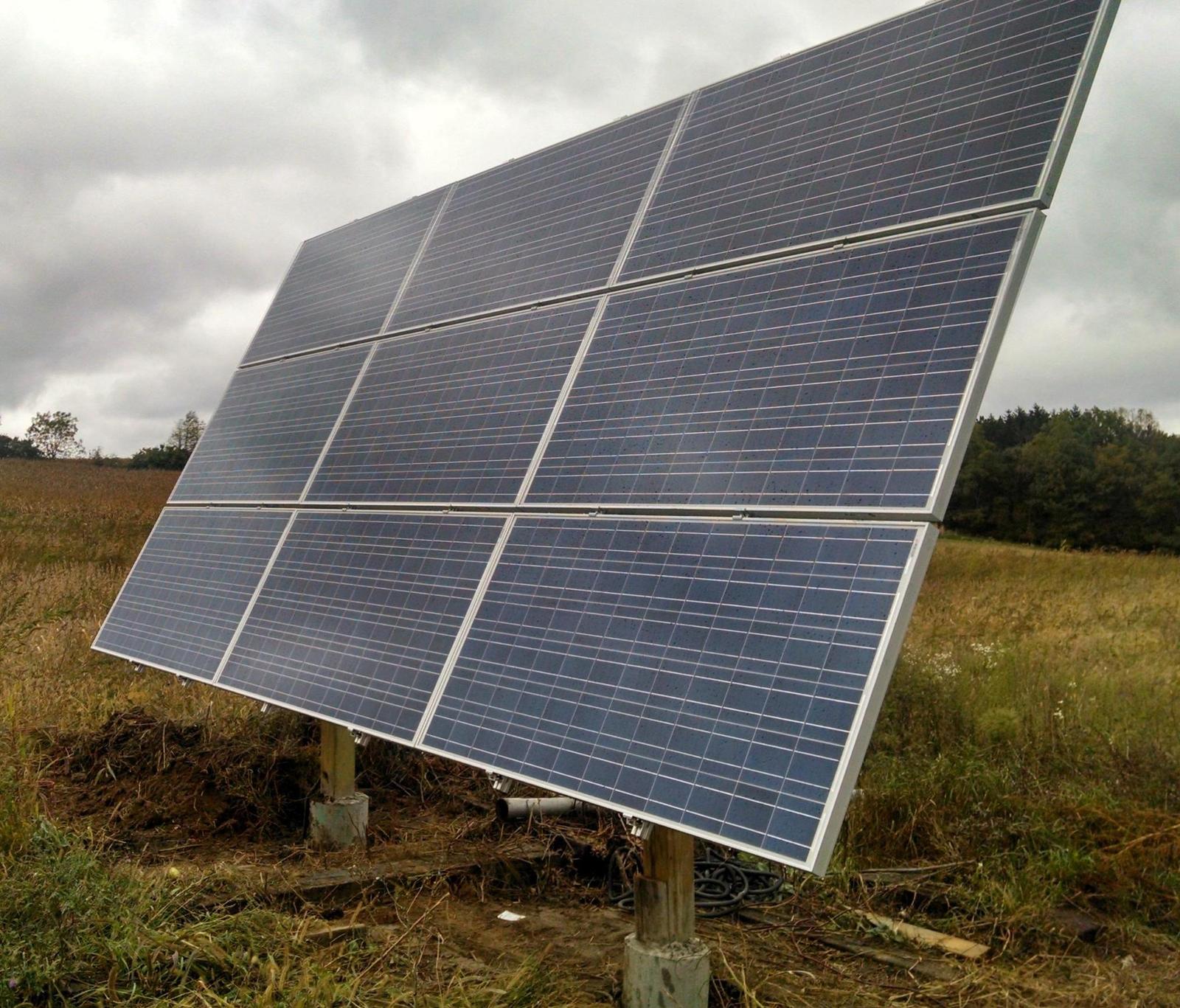
"6500 watts of solar and a 1800 watt windmill" doesn't match my concept of "without power".
itxtalone
How consistent is the power, do you have outages ?
none... with the power company for the 10 years before that at least 1 day a month
buttquencher
so your caption says without power. but your post is about power.
well my family thinks I am Amish or something and have candles and an outhouse
SarahKieser
How many horses/cattle do you have? How much energy do they require per month?
Blurryfaceandicarewhatyouthink
Lives in Seattle. Would only have power two months out of the year.
IWasInThePool
How much physical space do your batteries take?
about 3 cubic meters total
TheThingNoNotThatOne
Payback depends - most people aren't using $2k in electricity a year.
average use is around 1000KWH per month, not being on city water and using 500 gallons a day adds up in a hurry.
HotdogOnABridge
And i'm standing here with 2 batteries. Fuck
notnih
Excellent! May I ask the size of your farm? Are you adding more to deal with a lack of power?
I have 50 acres, I am adding more because I have cattle now and need to pump a lot of water for them.
Totally understand, my family had cattle most of my young life. A great way to be sustainable. If I ever have my own farm, I'll do this.
rockerBOO
How long do those panels last?
nicolas17
I don't think that matters much. Batteries are the components with actual lifespan issues.
SvarvSven
This is my dream for sure, to be able to disconnect from the greedy electric company. I know it will cost me more, but still...I like it...
Not so much greedy as locked into a business model that is becoming increasingly obsolete.
That could be true as well.
Around 78% of power is lost on the "grid" due to losses in the wires. Each person having a local loop, that can overflow to the grid (1/2)
78% seems awfully high compared to what I've seen: http://www.eia.gov/tools/faqs/faq.cfm?id=105&t=3
can be more efficient and helps to diversify power generation which allows more flexibility into the future.
I could agree to overflow to the grid when my batteries (or whatever storage I would be using) are full. But in general I agree with you.
Eunoterp
I almost had a system installed. then dude said 'No, you can't use it when the utilities are down, it's unsafe for line workers.' I bailed.
5aminsd
There are ways to get power when the grid is fown... Install a pigtail
imjustgoingtoputsomethinghere
I'm pretty sure any decent grid tied system has things to prevent back feeding the grid, it is a big problem though.
DorkJedi
So don't connect to the grid.
Steelwind
Yeah you need to be able to switch off the grid but it costs quite a bit more to add that.
Standard on-grid solar inverters will turn off when the upstream power fails.
bamaxray
So when the utility company is down and you actually NEED power, it turns off??
You'd need to make a local battery loop to store it before it goes into the main grid. Still would need to auto-shut off the upstream.
ah that makes logical sense to me...just not sending it upstream but still having an active STORAGE system to the batteries ready for use.
realrealluckless
You have paid for electricity, just not to a normal power company. But on-site generation is something we need far more of.
yes but it was 9 years ago :)
Oh, I thought your post said that you had expanded the system, not will expand. So you haven't paid in 9 years, but are about to again.
naikrovek
When you pay for solar panels you pay for electricity. You just don't pay the local utility company.
ok... as I agreed... but I have paid upfront and less per KWH every day as long as the sun comes up
Good luck, have fun. Personally I'm keeping my eye out for a property that I can put a micro-hydro plant on.
xkr73
don't pay anything. The sole reason for the grid is to fill the gaps during peak. [3]
They're starting to introduce those to new-build sites in the UK. Taking the natural watercourse, damming it, then building a micro-hydro[1]
plant to supplement grid power. As I understand it, most people on these sites pay 25-50% less than normal for power, and in off-peak times



thez0r
Good job :)
molliolli
Personally I'm waiting for domestic fusion reactors.
MasterXehanort
My dad tried to get solar on his house but they told him they don't put solar on trailers..
cousteau
"6500 watts of solar and a 1800 watt windmill" doesn't match my concept of "without power".
itxtalone
How consistent is the power, do you have outages ?
arcgap
none... with the power company for the 10 years before that at least 1 day a month
buttquencher
so your caption says without power. but your post is about power.
arcgap
well my family thinks I am Amish or something and have candles and an outhouse
SarahKieser
How many horses/cattle do you have? How much energy do they require per month?
Blurryfaceandicarewhatyouthink
Lives in Seattle. Would only have power two months out of the year.
IWasInThePool
How much physical space do your batteries take?
arcgap
about 3 cubic meters total
TheThingNoNotThatOne
Payback depends - most people aren't using $2k in electricity a year.
arcgap
average use is around 1000KWH per month, not being on city water and using 500 gallons a day adds up in a hurry.
HotdogOnABridge
And i'm standing here with 2 batteries. Fuck
notnih
Excellent! May I ask the size of your farm? Are you adding more to deal with a lack of power?
arcgap
I have 50 acres, I am adding more because I have cattle now and need to pump a lot of water for them.
notnih
Totally understand, my family had cattle most of my young life. A great way to be sustainable. If I ever have my own farm, I'll do this.
rockerBOO
How long do those panels last?
nicolas17
I don't think that matters much. Batteries are the components with actual lifespan issues.
SvarvSven
This is my dream for sure, to be able to disconnect from the greedy electric company. I know it will cost me more, but still...I like it...
IWasInThePool
Not so much greedy as locked into a business model that is becoming increasingly obsolete.
SvarvSven
That could be true as well.
rockerBOO
Around 78% of power is lost on the "grid" due to losses in the wires. Each person having a local loop, that can overflow to the grid (1/2)
IWasInThePool
78% seems awfully high compared to what I've seen: http://www.eia.gov/tools/faqs/faq.cfm?id=105&t=3
rockerBOO
can be more efficient and helps to diversify power generation which allows more flexibility into the future.
SvarvSven
I could agree to overflow to the grid when my batteries (or whatever storage I would be using) are full. But in general I agree with you.
Eunoterp
I almost had a system installed. then dude said 'No, you can't use it when the utilities are down, it's unsafe for line workers.' I bailed.
5aminsd
There are ways to get power when the grid is fown... Install a pigtail
imjustgoingtoputsomethinghere
I'm pretty sure any decent grid tied system has things to prevent back feeding the grid, it is a big problem though.
DorkJedi
So don't connect to the grid.
Steelwind
Yeah you need to be able to switch off the grid but it costs quite a bit more to add that.
rockerBOO
Standard on-grid solar inverters will turn off when the upstream power fails.
bamaxray
So when the utility company is down and you actually NEED power, it turns off??
rockerBOO
You'd need to make a local battery loop to store it before it goes into the main grid. Still would need to auto-shut off the upstream.
bamaxray
ah that makes logical sense to me...just not sending it upstream but still having an active STORAGE system to the batteries ready for use.
realrealluckless
You have paid for electricity, just not to a normal power company. But on-site generation is something we need far more of.
arcgap
yes but it was 9 years ago :)
realrealluckless
Oh, I thought your post said that you had expanded the system, not will expand. So you haven't paid in 9 years, but are about to again.
naikrovek
When you pay for solar panels you pay for electricity. You just don't pay the local utility company.
arcgap
ok... as I agreed... but I have paid upfront and less per KWH every day as long as the sun comes up
realrealluckless
Good luck, have fun. Personally I'm keeping my eye out for a property that I can put a micro-hydro plant on.
xkr73
don't pay anything. The sole reason for the grid is to fill the gaps during peak. [3]
xkr73
They're starting to introduce those to new-build sites in the UK. Taking the natural watercourse, damming it, then building a micro-hydro[1]
xkr73
plant to supplement grid power. As I understand it, most people on these sites pay 25-50% less than normal for power, and in off-peak times