
RankX

4030

43

1
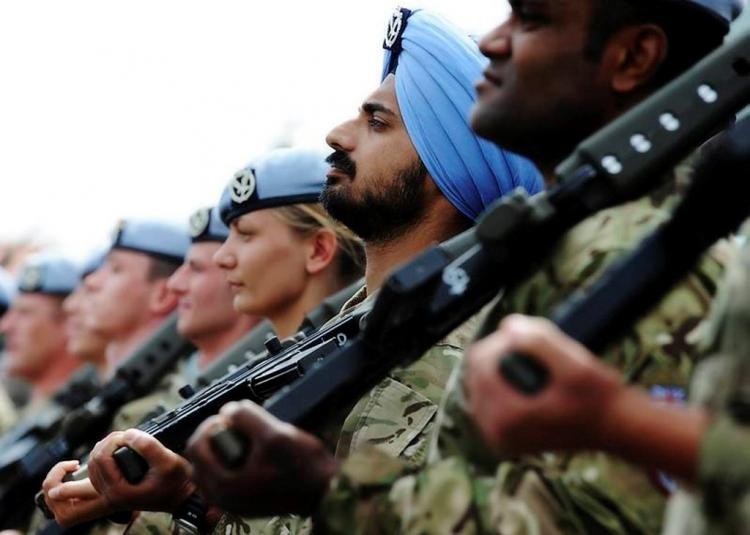
The Army's policy on dress regulations, including facial hair, is "routinely" reviewed, according to an officer.
Lieutenant Colonel Rachel Emmerson was responding to a letter in Soldier magazine, which suggested the service's policy could change at some point.
It is protocol to be clean-shaven when dressing in Army uniform unless the permission of the commanding officer is obtained.
Otherwise, there are only a few exceptions in the Army which allow for servicemen to have a beard, such as skin complaints or for religious reasons.
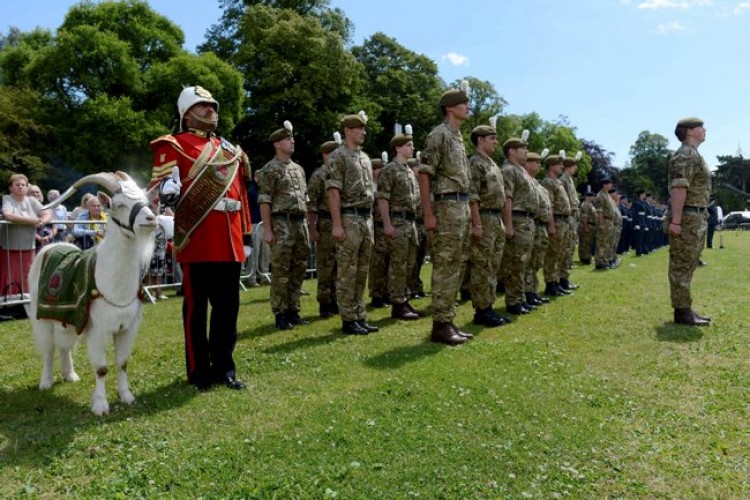
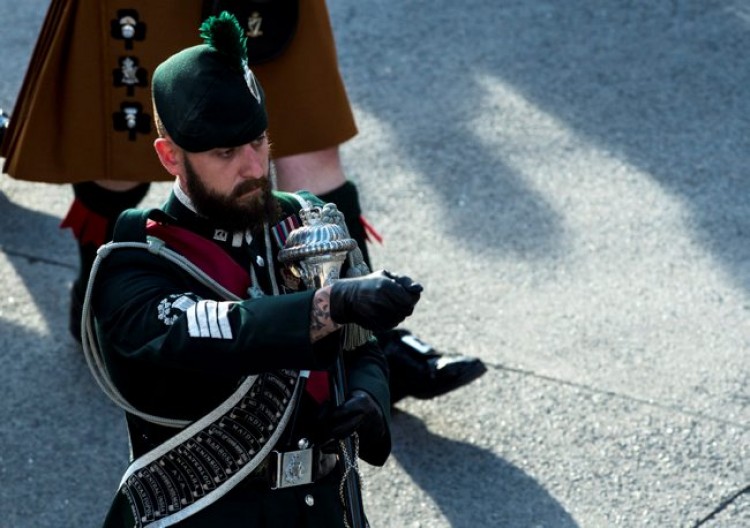
Some of the only roles allowed a beard on parade include Pioneer Sergeants, Drum Majors, Pipe Majors, Bugle Majors and Goat Majors.
Who Is The Pioneer Sergeant?
The Pioneer Sergeant is one of the few positions within the British Army allowed to have a beard when on parade.
Pioneer Sergeants have existed since the 1700s. The tradition began when every British infantry company had one 'pioneer' who would march in front of the regiment.
He would wear a 'stout' apron, which protected his uniform whilst he was performing his duties, and carry an axe to clear the path for anyone following behind.
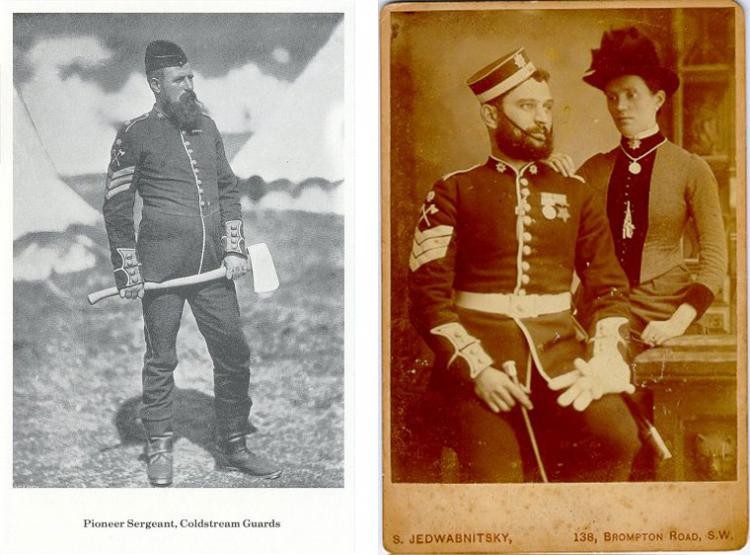
It was also the Pioneer Sergeant's duty to kill horses that had been wounded in battle.
He would often have to cut off one of the stricken horse's legs so that its rider could receive a new animal - each had a number branded onto its hoof to prevent false claims, such as if a cavalryman had sold his mount.
Pioneers in those times would also carry a sawback sword, pickaxe, billhooks, shovels, and axes. They were traditionally the largest, strongest and most imposing members of the company.
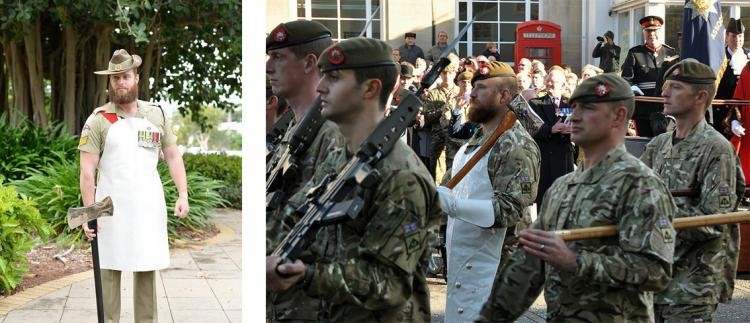
The pioneer sergeant also acted as the blacksmith for the unit. As a result, he was allowed a beard to protect his face from the heat of the forge.
Nowadays the Pioneer Sergeant is usually responsible for carpentry, joinery and similar types of work.
Pioneer sergeant
In modern parades, Pioneer Sergeants still wear their ceremonial aprons and carry their traditional axes, which act in place of a bayonet.
Pioneer sergeants
That is not to stay there aren't exceptions to the rule though. Other Army members can sport a beard in certain circumstances.
Soldiers can grow a beard for medical reasons, such as in the case of a temporary skin irritation, or, more commonly for religious reasons.
It is prohibited, for example, within the Sikh religion to cut one's hair. As a result, Sikh personnel within the British Army are allowed to have beards.
While Bugle Majors do not grow a full beard, tradition requires a 'full set' moustache with large sideburns, but no hair on the chin.
In British military parlance, a full-set means moustache and side-burns, not a full beard.
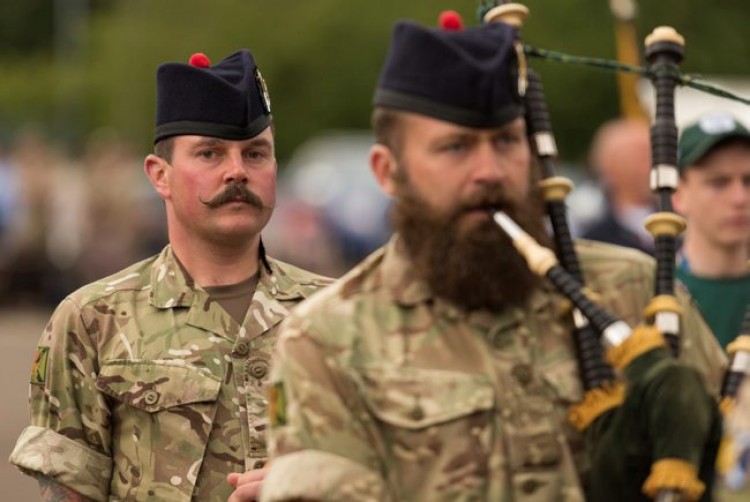
Meanwhile, Drum Majors and Pipe Majors are also permitted facial hair, as are Goat Majors.
Members of the Special Forces may also wear beards when behind enemy lines or on covert intelligence operations.
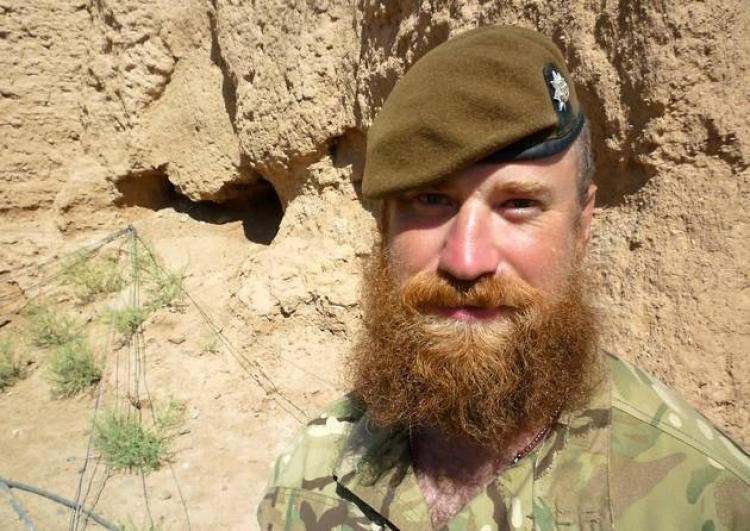
There have also been reports in recent years of British Army members serving in Afghanistan having beards or stubble to try to blend in with Afghan men, who see beards as a symbol of virility and authority.
Interestingly, other branches of the Armed Forces have wholly different attitudes towards facial hair.
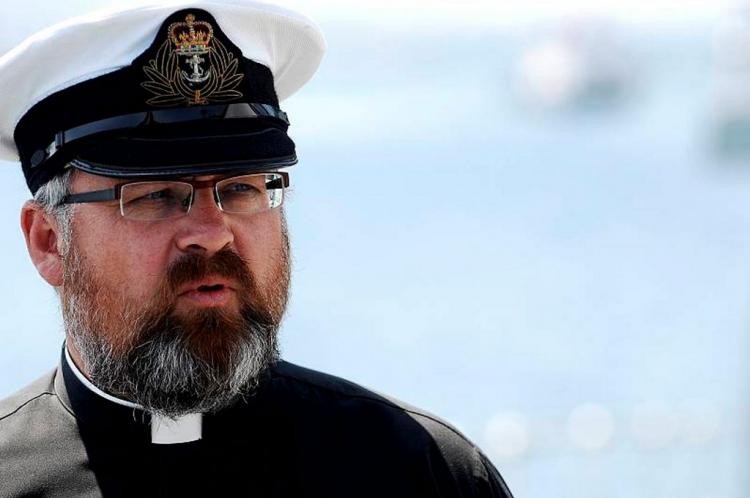
In the Royal Navy, full beards have always been allowed as long as permission is sought and granted, whereas moustaches, which are permitted within the RAF, Army and Royal Marines are forbidden.
But anyone wishing to grow a beard in the Navy must have a 'full set,' that is, a full beard covering the whole jawline, joined to a moustache.
And commanding officers can order an individual to shave off his facial hair if it becomes clear after around six weeks that he cannot grow a proper full set.
Navy members should then keep their beard, once approved, for at least six months.
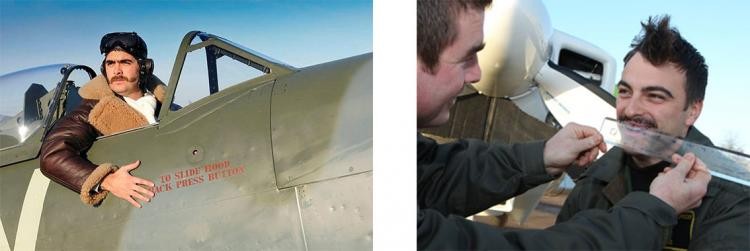
Members of the RAF, on the other hand, may not have beards in any circumstances (unless they are Sikh). Moustaches may be worn, but only on the condition that it does not extend below the edge of the mouth - so no "handlebars".
Indeed, one RAF Flight Lieutenant was so keen not to lose his impressive 'tache that he refused an order from an American general to trim it whilst on a posting with the US Air Force 366 Fighter Squadron in Afghanistan.
AnusReadyToBeRavaged
Top notch. But in the navy you get 2 weeks to show that your beard is showing enough to become a full set. If not, off it comes
toomuchchoice
Are you seriously not going to explain the goat??
Castironpeppers
I mean....it's a goat.....what's to explain?
RankX