
Altanese

838

20

6

Above: The current flag of the Republic of Iraq.
In what could be the first of several, let's take a look at the past 100 years of Iraqi history, and perhaps give a better look at how it got to where it is today.
Please make note that this is not intended to be a comprehensive history, merely a summation of events over the past century. If you find anything wrong or feel I've left out something important, don't hesitate to tell me so.

Above: The original Sykes-Picot agreement, overlaid atop modern borders.
In the aftermath of the First World War, Iraq was one of several areas under former Ottoman control that was occupied by Entente forces. In this case, it was the British Empire that controlled the area. British forces were initially allied with native Arabs in the Middle East who were tired of Turkish rule, most popularized by the exploits of T. E. Lawrence.
Many of the former Ottoman lands were divided among the vilayets (or provinces) that the Ottoman rulers had already established. At the time, there was not much nationalism for Iraq as a nation, as it had been divided into three such vilayets, but they were merged into the Kingdom of Iraq by the British in the early 1920s, with a Hashemite ruler appointed as king.
Fun fact: It was also during this time in the 1920s that slavery was abolished in Iraq.

Above: Faisal I, front and center, with Nuri as-Said to the left and T. E. Lawrence to the right, at the Versailles peace conference.
Faisal I seemed a natural choice for the victorious powers, as the Hashemites can trace their dynasty to the same lineage as the prophet Muhammad, and they had ruled for centuries as the sharifs of Mecca until the Saudi conquest. He was also the King of Syria at the time, though few in Iraq knew who he was or had even heard of his name. Regardless of this, he was decided to rule by plebiscite, though the new king did not have much in the way of an Iraqi identity. Faisal I instead envisioned a combining of the various French and British lands, including Iraq, Syria, Lebanon, and Palestine, into a greater Arab state.
He didn't get very far in this vision however, as he had to deal with not only the foreign interests of Britain and France, but also growing dissent for his rule at home. British authorities had made the choice to rely on the Sunni elite as a power base, one which Faisal I was also reliant on as a consequence. At the time, Iraq was a Shiite-majority nation, and the incorporation of Sunni-majority lands would shift the balance of power. Additionally, the Shiite population in Iraq had historically looked to Iran, giving them a Persian rather than Arab identity.
As part of his pan-Arab agenda and as a means to strengthen his support at home, Faisal I made the decision to open up the borders of Iraq to Arab emigres, a move that would only foster more dissent from both sides of the brewing conflict.
It was in the midst of all of this that the British granted independence to Iraq in 1932, though they would retain military bases and militias in the area, partly at the urging of Faisal I, who thought he could count on British support in case of revolt.

Above: British troops in Baghdad, 1941.
In 1933, King Faisal I died, and his successor King Ghazi's reign was also marred by unpopularity and undermined by attempted military coups. After Ghazi's death in 1939, Faisal II would take the throne, continuing the trend of unpopular monarchs in the young Kingdom. This growing dissent would come to a head at the onset of the Second World War.
On April 1st, 1941, members of the Golden Square, a prominent group of officers in the Iraqi military, launched a coup against Faisal II, and declared Iraq's neutrality in the war. Britain, afraid that Iraq would cut off oil supplies to itself and it's allies, and also fearful of a potential Iraqi alliance with the Axis powers, quickly moved it's military forces in the area to restore the monarchy. The British invasion began scarcely a month later on May 2nd, and after only a few weeks they forced the surrender of the Iraqi forces on May 31st.
Following this failed revolution, the British would maintain a military occupation of Iraq throughout the war, only ending in 1947, long after the Axis threat had been defeated. For the next decade, Iraq would continue on under the rule of Faisal II and the Prime Minister Nuri as-Said, another unpopular leader, until a more successful revolution would occur.

Above: Iraqi revolutionary soldiers during the 14 July Revolution.
King Faisal II and his government were removed from power in 1958 during a coup which claimed both his own life and that of much of the monarchy. General Abd al-Karim Qasim, leader of the coup, began a program of land redistribution along a socialist line, until he himself was ousted in a coup by Colonel Abdul Salam Arif in 1963, and when he himself died in 1966, his brother Abdul Rahman Arif would remain in power until being overthrown by the Ba'ath Party in 1968.
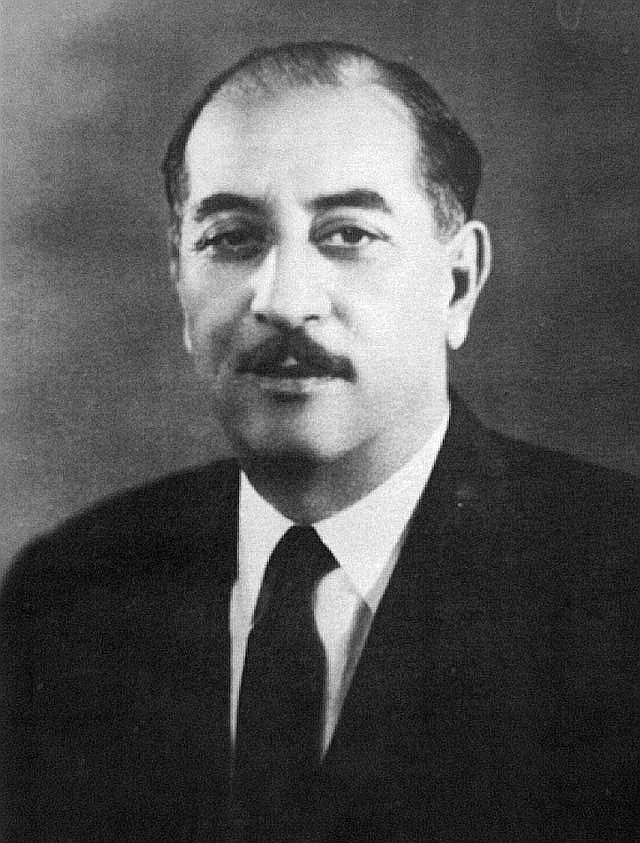
Above: Ahmed Hassan al-Bakr, leader of the Ba'ath Party.
Following a relatively quick succession of coups and power struggles between various factions, Iraq would finally find some stability under President al-Bakr. During this time, oil prices rose quickly, and helped to finance socialist-oriented projects that would raise the standard of living for most in the country. During this time, Iraq strengthened it's ties with the Soviet Union, and electricity would make it's way to the countryside for the first time in Iraqi history.
However, not everything was well under al-Bakr's rule, as non-Ba'athist political parties were banned, and the Kurds in northern Iraq saw increased oppression as they demanded more autonomy from the central government. At least some of this might be blamed on a rising power in al-Bakr's government who would gradually wrest control from him during the 1970s as his health failed.

Above: Saddam Hussein, 1979, the year he took control of the Ba'ath Party and the nation of Iraq.
Citing health reasons, al-Bakr was forced to resign in 1979, and his Presidency went to Saddam Hussein. President Hussein quickly purged the Ba'athists of any elements perceived as disloyal to him and his rule, labeling them as anti-revolutionaries and imperialists.
In the same year, Iraq's neighbor Iran would see a revolution against it's own monarchy much like Iraq had done two decades earlier. Following decades of tense relations, owing to Iraq's unstable relations between the Sunni and Shia, and Arabs and Kurds, Iraq and Iran began to raid each others' borders. All of this would culminate with Hussein declaring war on Iran in 1980.

Above: Iraqi soldiers during the Iran-Iraq War.
Hussein hoped to take advantage of Iran's post-revolutionary chaos, and his forces made some headway early in the war. Within two years however, Iran had retaken almost all occupied territory, and would remain on the offensive for the next six years. During this long stalemate, many tactics of the First World War would make a reappearance, most particularly the use of trenches.
Unfortunately as the war took a turn against Iraq, Saddam Hussein decided to begin using another WW1 callback in the form of chemical weapons. These were used extensively against Iranian forces, and even deliberately on civilians. During the later stages of the war, this even extended to Saddam's own people, in the form of the Al-Anfal Campaign, a genocide against Iraqi Kurds.

Above: Graves for victims of one such chemical attack on Halabja, a Kurdish city in northern Iraq.
Exact casualties vary, but the war saw roughly 500,000 soldiers on both sides killed, and about the same number of civilians.
1988 saw peace between Iraq and Iran, though tensions have continued even to this day. The United Nations, while condemning the attacks on civilians, did little to stop Iraq, and did not identify Iraq as the aggressor in the war until 1991. By this time, a new conflict in the area had begun.
In August of 1990, Saddam Hussein sought a weaker target of conquest and settled on Iraq's neighbor Kuwait. Kuwaiti forces were quickly defeated by the large, veteran forces of Iraq's military, and was annexed after only two days. The UN took greater notice of these offensive maneuvers, however, and the United States in particular demanded that Iraqi forces withdraw. Saddam would not relent, and soon the Gulf War would begin.

Above: American aircraft above burning Kuwaiti oil fields in one of the iconic images of the Gulf War.
Just as Iraqi forces had easily defeated Kuwait, they too were being pushed back with relative ease by the American-led intervention. Kuwait was soon liberated after less than a year of Iraqi occupation, and some called for the war to continue on to overthrow Hussein's government. These proposals were quickly discarded, and a peace was established in 1991.
Soon after, Kurdish and Shiite uprisings began against Saddam's rule, but just as he had during the Iran-Iraq War, his response to this was to use chemical weapons against the revolt. Estimates are that 100,000 people died in this genocidal act, and following this attack, the UN called for Iraq to destroy it's chemical weapons, and applied sanctions to Iraq. Common consensus for a time was that these sanctions caused a major rise in the child mortality rate in Iraq, but in recent years these numbers are held in question, and it is generally agreed that Saddam's regime mostly fabricated the claims.
The rest of the 1990s would see relative peace in Iraq for a time, with no major wars, coups, or revolts, though the decade was still marked with the occasional uprising by the Shia or Kurd populations. This would continue until the beginning of the 21st century.

Above: Another iconic photo, this one of a statue of Saddam being toppled by American forces.
Following the September 11th attacks on the United States, Saddam Hussein initially praised the attack and justified it, but quickly reversed this position and offered condolences to America after it became clear that the rest of the world had nearly unanimously condemned the attacks.
The reasons for the lead up to America's war with Iraq in 2003 are too varied and still controversial to get into with this post (and I would like to take this moment to please ask that the comment section also not devolve into debate over this particular topic), but suffice to say that on March 20th of that year, a US-led coalition invaded the country with the intent of overthrowing Saddam Hussein.
Though the Iraqi military was as unprepared to face American forces as they were a decade ago, Saddam himself would go into hiding, and the United States would be forced to deal with asymmetrical warfare in the form of intense insurgencies against their presence in the region.

Above: American marines during the Second Battle of Fallujah, one of the bloodiest battles of the war.

Above: Saddam Hussein on trial, he would later be sentenced to death.
In 2005 elections took place in the country, and in the same year a new constitution was put into place by the new government. In 2006, the former dictator Saddam Hussein would be executed for various war crimes and crimes against humanity, and from 2008 onward, US forces began relegating more and more duties to the Iraqi military and began the first steps toward withdrawal. Though hundreds of thousands of lives were lost during the war, there was optimism by many that the nation would finally see some measure of peace and stability.
However, this stability would not come, and in 2011, after American forces withdrew, the Arab Spring revolts spread to Iraq, leading to an increase in insurgent activity. As neighboring Syria fell into civil war, both Sunni and Shiite fighters would cross the border to fight for their own sides, and many people on all sides of Iraq would feel dissatisfied with the government. This dissatisfaction would help to pave the way for a new power to rise up in the area.

Above: An ISIS convoy in Iraq.
The Islamic State, known by several other names but primarily in the west as ISIS, would see a meteoric rise to power in both Syria and Iraq. Large swaths of countryside would fall to this extremist militant group, and terrorist activities in non-occupied areas of Iraq increased dramatically. Violence in the area was the worst the nation had seen since the American invasion, and perhaps even since the Iran-Iraq War three decades earlier.
ISIS's power would plateau in 2014, however. In the years following, the terrorist group's hold would waver and finally collapse, due to valiant efforts by both Kurdish militants and Iraqi government forces, who would cooperate together against this common threat after decades of mutual mistrust for each other.

Above: A man and his daughter fleeing away from ISIS and towards Iraqi forces in March, 2017, during the Battle of Mosul.
By July of 2017, ISIS would be driven from Mosul, it's last major stronghold in Iraq, and by December of the same year the Iraqi government would declare victory in it's ongoing struggle against the group. Though ISIS fighters remained behind for future terrorist attacks, the majority either fell back, surrendered, or were killed in the conflict, and they no longer exercise open authority over any part of the country.
Though Iraq of today still has many problems facing it, including unresolved tensions between Sunni and Shiite populations, and the ongoing Kurdish fight for greater autonomy or even outright independence, the defeat of ISIS in the area has spelled hope for the region. After decades of fighting, the nation might soon finally enter an era of peace.
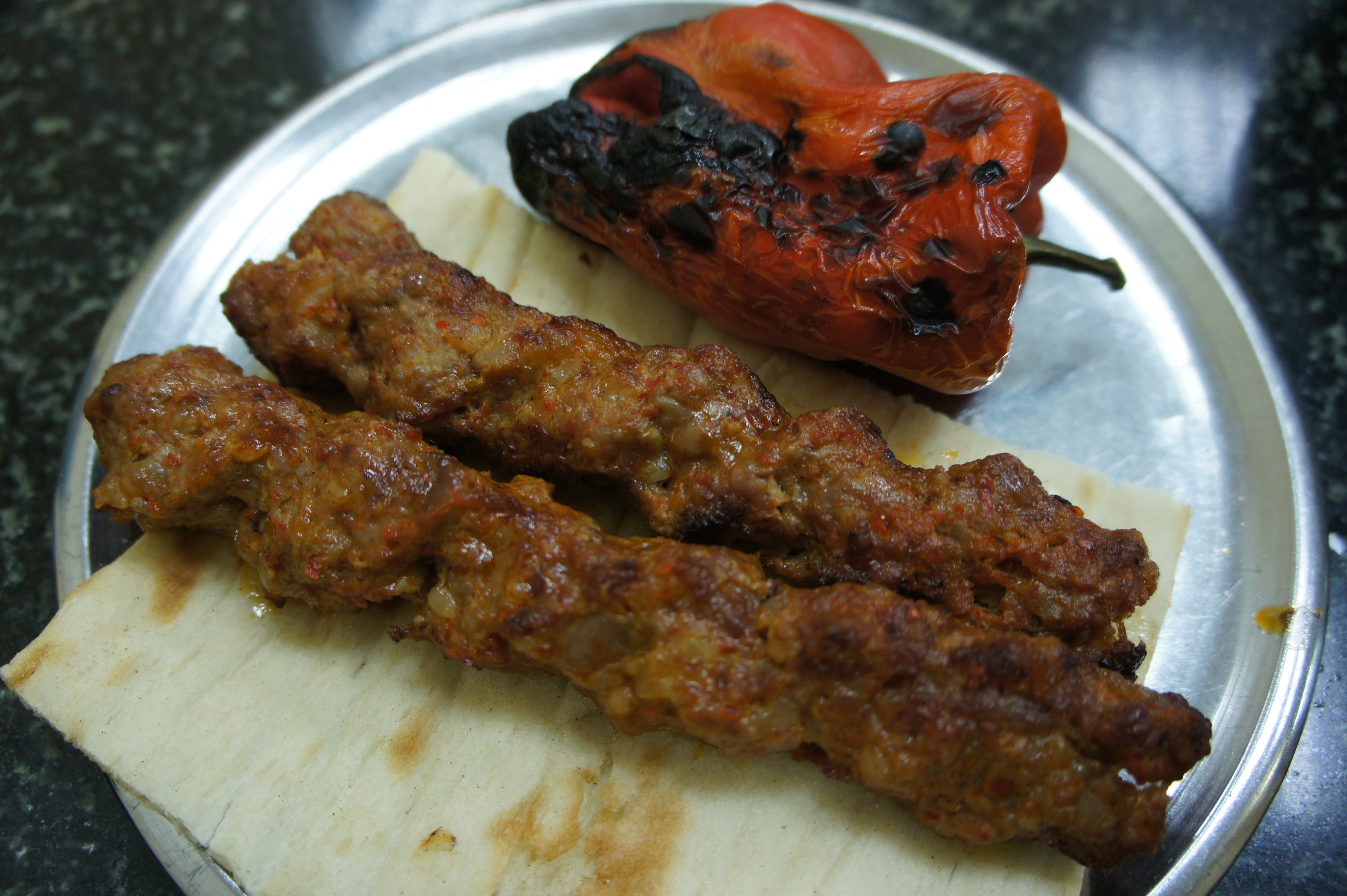
Iraqi kebab tax.
Here's hoping this helped some of you learn a bit more about this nation and how it got where it is today.
ahmedas42410
It’s Nuri Al Said not as & it’s Coup d’etat of 1958 not 1958 revolution many Iraqis will hate that who likes it are the communists
thefeckamisigningupwithfacebook
It could be worth commenting in a follow up about the history of the Kurds in Iraq. Overall dude- an excellent overview.