
solderking

1478

45

3

So it works! I ran into some issues I'll explain below.

The goal with this board is to make an all in one modular Bluetooth receiver for audio applications.
It has the ability to be a receiver for a bigger system or be a portable unit that's powered by a lithium ion battery.
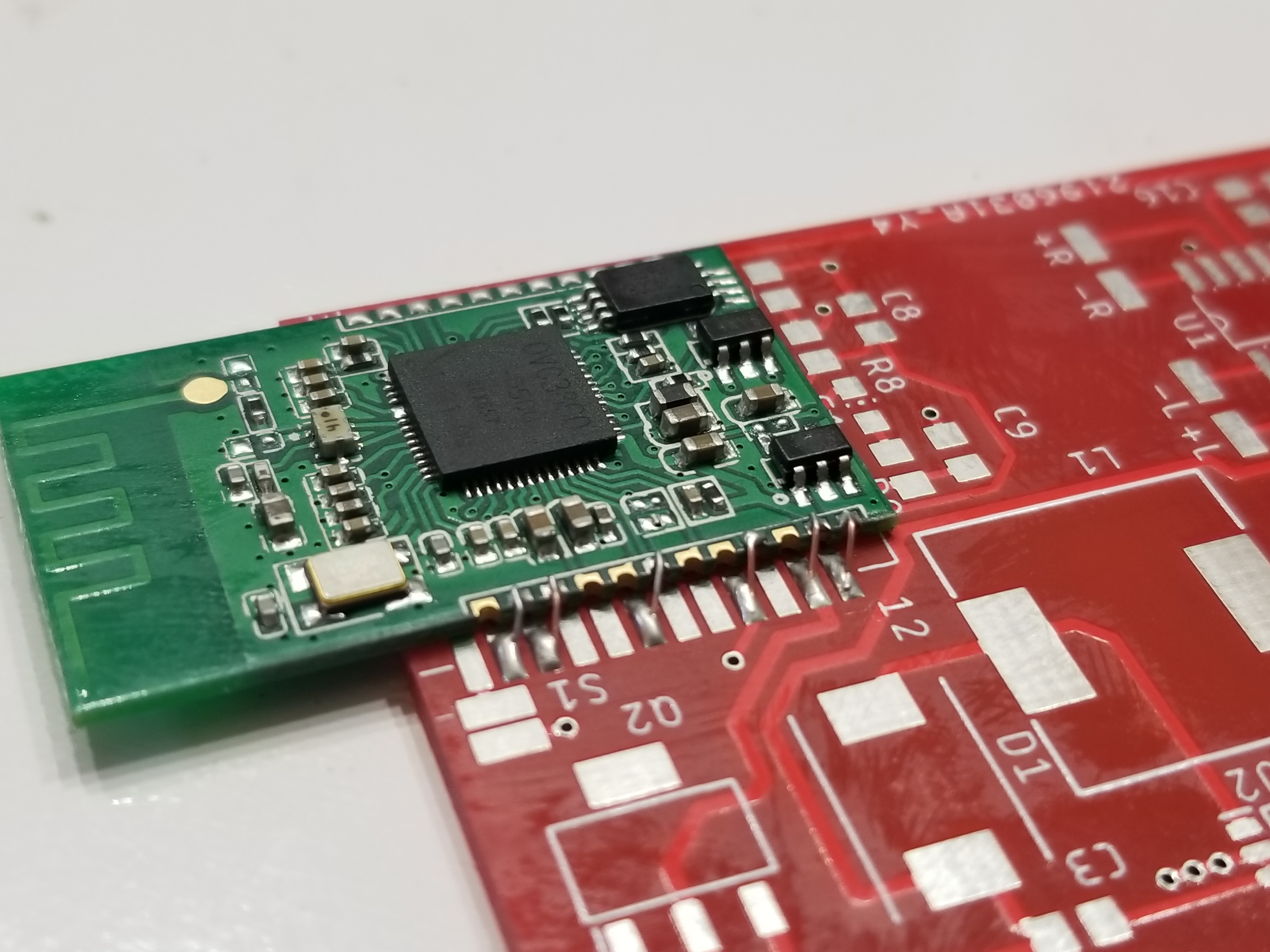
This was the first mistake. Trusting someone else's package when I was too lazy to make my own. One side of the module would line up but the other side would be off. To address this for testing purposes I soldered the one side with the most connections and used thin wire to run the other side.

First test after everything is stuffed.
This thing has the ability to charge and discharge a lithium ion battery as well as provide the proper voltages for the amp and module.

After the battery was charged I turned the board on which throws the battery supply to a switch mode 5 volt regulator and a linear 3.3 regulator.
It worked for about 5 seconds then a few things smoked. The audio amp blew, the 3.3 reg blew and the module was toast.

And this is why. This wire isn't suppose to be here and this was later incorporated into the board.
This rogue wire grounds the feedback for the switch mode regulator which caused the 5 volt regulator to short and blew a few things on its way out.

That's what it should look like.
The weird part is that in my eagle 7 files the wire is right but when I switched to 9 this happened. No idea why.

This was the solution. I had to cut the feedback in pin free and route the connections as they should be.
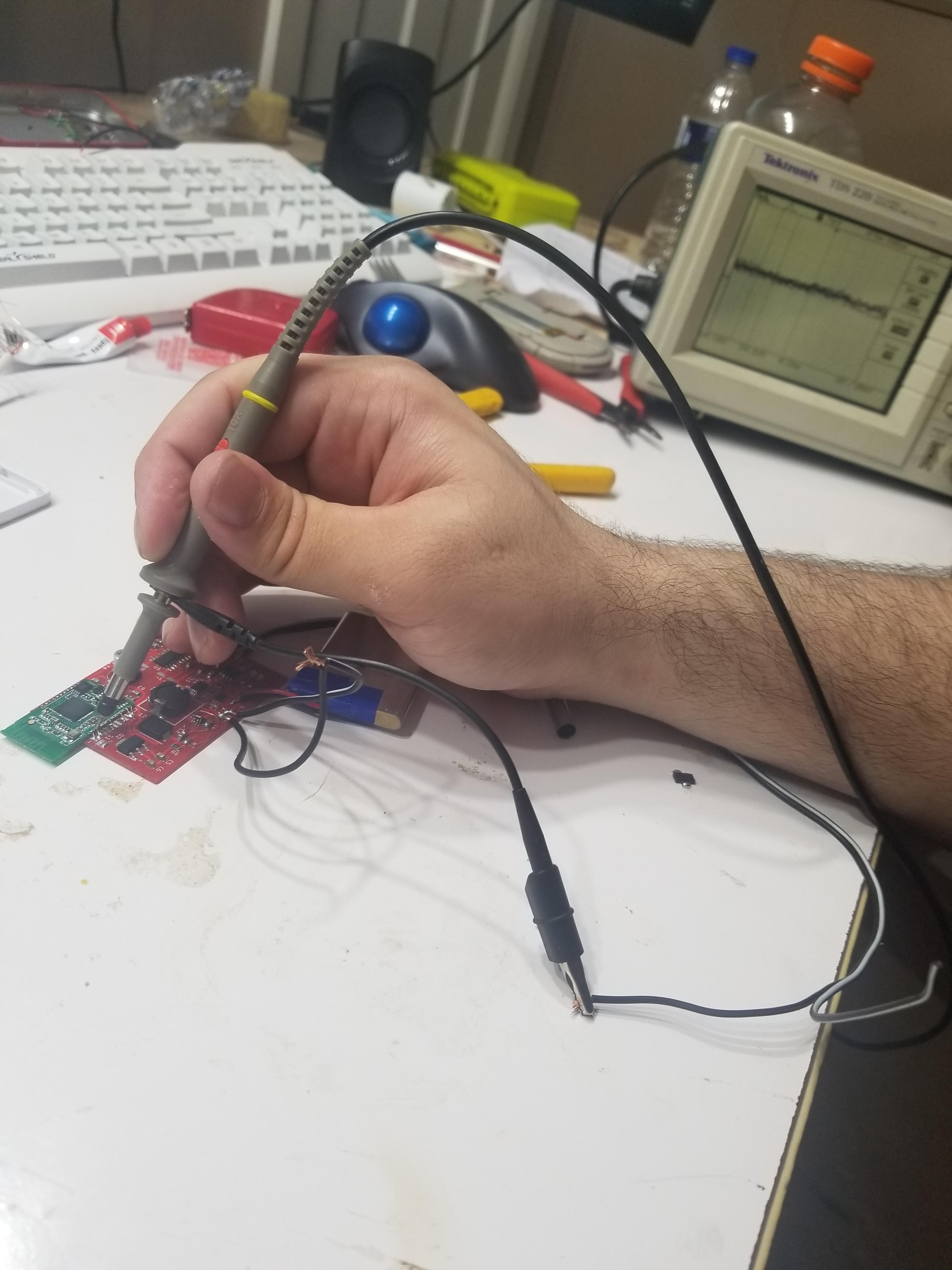
And it works! Checking out the audio signals.

This cap also has to be added in the next board.
Hope you enjoyed maybe! If not here's the cat I feed.

Biocide669
Badass
wheresmybanana
Cool cat right?
EmoBacon
neat
HateMeFuckYou
did you teach yourself? or proper school? 0
solderking
Self taught :)
Captain77
Where would you recommend to start to learn to do this kind of thing?
solderking
I'd start with reading up on ac/dc to understand voltage, power, current, ohms law, voltage drop and all the fundamentals. While doing that
solderking
Check out sites like instructables and hackaday. They are loaded with detailed projects that build an understanding of circuitry.
solderking
Find a small project then try to replicated it and truly understand how it works.
Skywalker2416
I wish I had the knowledge to do what youre doing. I’d love to have something comparable to a Powerwerks pw40btbat. It’s a 40w portable Pa>
Skywalker2416
>it costs about $250. You think it’s possible to build something equivalent for the price? Or nah, buy one? I’d love to know how to do it...
solderking
It depends on a few things but everyone who sells their product sells it for a profit so I'd say it is possible
solderking
It's not something you're born with so I'd suggest starting with basic books and build from there :)
Killertomatonew
if i've learned anything from watching louis rossman fix macbooks on youtube, it's you didn't use near enough flux. should be swimming in it
solderking
It's all over the board still lol. You don't need an insane amount to flow onto new pads that aren't apart of a larger plane
RulesOfImgur
I love pcbs. I build them at my job. Sadly only through hole.
bohemiancrapsody
What ble chipset are you using
widiwi
from the third picture... https://www.google.com/search?q=OVC3860