
Mehlbox

19760

1133

13

Source: https://www.theatlantic.com/ideas/archive/2025/02/corruption-trump-administration/681794/
Author: Jonathan Rauch
Date: February 24, 2025
Article:
One Word Describes Trump
A century ago, a German sociologist explained precisely how the president thinks about the world.
Since taking office, he has reduced the effectiveness of his administration by appointing key agencies to people who lack the skills and temperament to do the job. Mass layoffs have stripped the government of many of its most capable employees. He has flouted laws that he could easily have obeyed (for example, refusing to give Congress 30 days' notice before firing inspectors general). He has ignored the plain language of statutes, court decisions, and the Constitution, setting himself up for court battles that he is likely to lose. Few of his executive orders have gone through a thoughtful drafting process to ensure they won't fail or backfire—which assumes that many of them will.
On foreign affairs, he has opposed Denmark, Canada, and Panama; renamed the Gulf of Mexico "American Gulf"; and unveiled the "Gaz-a-Lago" plan. To top it off, he declared himself chairman of the "Kennedy Center", as if he didn't have enough to do.
Even those who expected the worst from his reelection (I'm among them) expected more rationality. It is clear today that what has happened since January 20th is not just a change of administration, but a change of regime - that is, a change in our system of government. But a change to what?
There is an answer, and it is not classic authoritarianism, nor autocracy, oligarchy, or monarchy. Trump is establishing what scholars call patrimonialism. Understanding patrimonialism is essential to defeating it. In particular, he has one fatal weakness that Democrats and other Trump opponents should make their primary and ongoing line of attack.
Last year, two professors published a book that deserves wide attention. In "Assault on the State:" Stephen E. Hanson, professor of government at the College of William and Mary, and Jeffrey S. Kopstein, a political scientist at the University of California, Irvine, revive a somewhat forgotten term that was coined by Max Weber, a German sociologist best known for his seminal book "The Protestant Ethic and the Spirit of Capitalism."
Weber is interested in how state leaders gain legitimacy, the claim to rule well. He argues that it comes down to two possibilities. One is rational, legally based bureaucracy (or "bureaucratic proceduralism") - a system in which legitimacy is conferred by institutions that follow certain rules and norms. This is the American system that we all took for granted until January 20. Presidents, federal employees, and military personnel who enter office swear an oath to the Constitution, not to any person.
The other source of legitimacy is older, more widespread, and more intuitive - "the standard form of government in the premodern world," Hanson and Kopstein write. "The state was little more than the ruler's larger "household"; it did not exist as a separate entity." Weber calls this system "patrimonialism" because rulers claim to be the symbolic father of the people - the embodiment and protector of the state. This is precisely the idea behind Trump’s own chilling declaration: “He who saves his country breaks no law.”
In his day, Weber believed that patrimonialism was on its way to the dustbin of history. His personal style of governance was too inept and capricious to manage the complex economies and military machines that, since Bismarck, have become the hallmarks of modern statehood. Unfortunately, he was wrong.
Patrimonialism is not so much a form of government as a style of government. It is not defined by institutions or rules; rather, it can infect all forms of government, replacing impersonal, formal lines of authority with personalized, informal ones. Based on individual loyalty and connections, as well as rewarding friends and punishing enemies (real or perceived), it can be found not only in states, but also among tribes, street gangs, and criminal organizations.
In its state form, patrimonialism is characterized by governing the state as if it were the leader's personal property or family business. It can be found in many countries, but its main contemporary exponent - at least until January 20, 2025 - is Vladimir Putin. In the early part of his rule, he ruled the Russian state as a personal racket. State bureaucracies and private companies continued to function, but the real principle of governance was to stay on Vladimir Vladimirovich's side... or!
In his quest to make the world safe for gangsterism, Putin has used propaganda, subversion, and other forms of influence to spread the model abroad. Over time, the patrimonial model has taken hold in countries as diverse as Hungary, Poland, Turkey, and India. Gradually, these countries have coordinated into a kind of syndicate of crime families—"solving problems," Hanson and Kopstein write in their book, "dividing the spoils, sometimes fighting, but helping each other when necessary." In this scheme, Putin has assumed the position of capo di tutti capi, the boss of bosses."
So far. Make way, President Putin.
To understand the source of Trump's power and his fundamental weakness, we need to understand what patrimonialism is not. It is not the same as classical authoritarianism. And it need not be antidemocratic.
The antithesis of patrimonialism is not democracy; it is bureaucracy, or more precisely bureaucratic proceduralism. Classical authoritarianism—the kind of system seen in Nazi Germany and the Soviet Union—is often highly bureaucratized. When authoritarians seize power, they consolidate their rule by creating structures such as secret police, propaganda agencies, special military units, and politburo. They legitimize their power with legal codes and constitutions. Orwell understood the bureaucratic aspect of classical authoritarianism; in 1984, Oceania's Ministries of Truth (propaganda), Peace (war), and Love (state security) are the most characteristic (and terrifying) features of the regime.
Patrimonialism, by contrast, is suspicious of bureaucracies; after all, to whom are they loyal? They can acquire their own powers, and their rules and procedures can be a hindrance. People with expert knowledge, experience, and excellent CVs are also suspect, as they carry independent standing and authority. So patrimonialism supplies the government with incompetents and stooges, or, when possible, bypasses bureaucratic procedures altogether. When USAID security officers tried to protect classified information from Elon Musk’s unverified DOGE team, they were simply put on leave.
Patrimonial rule’s aversion to formalism makes it capricious and even bizarre—as when the leader announces out of thin air the renaming of international bodies of water or the U.S. occupation of Gaza.
Also, unlike classic authoritarianism, patrimonialism can coexist with democracy, at least for a while. As Hanson and Kopstein write, "a leader can be democratically elected, yet still seek to legitimize his rule in patrimonial terms. Increasingly, elected leaders seek to dismantle bureaucratic administrative states ("deep states" as they are sometimes called) that have been built up over decades in favor of the rule of family and friends." India's Narendra Modi, Hungary's Viktor Orbán, and Trump himself are examples of elected patrimonial leaders—and ones who have achieved considerable public support and democratic legitimacy.
Once in power, patrimonialists like to dress up in the rhetoric of democracy, such as Elon Musk, who justifies his team's extralegal actions by driving the "unelected fourth unconstitutional branch of government" to be "responsive to the people".
However, as patrimonialism cuts through the procedural tendons of government, it weakens and ultimately cripples the state. Over time, as it seeks to take root, many leaders try to shift to full-fledged authoritarianism. "Electoral processes and constitutional norms cannot survive long when patrimonial legitimacy begins to dominate the political arena," Hanson and Kopstein write.
Even if authoritarianism is avoided, the damage that patrimonialism does to state capacity is serious. The best people in governments leave or are ousted. The missions of agencies are distorted and their practices are corrupted. Procedures and norms are abandoned and forgotten.
Civil servants, contractors, grant recipients, corporations, and the public are corrupted by the habit of favoritism.
So the claim that Trump doesn’t have the temperament or the attention span to be a dictator is of little comfort. He is the perfect organism of patrimonialism. He doesn’t recognize the distinction between public and private, legal and illegal, formal and informal, national and personal. “He can’t tell the difference between his self-interest and the national interest, if he even understands what the national interest is,” says John Bolton, who was Trump’s national security adviser during his first term. As a prominent Republican politician recently told me, Trump’s understanding is simply: “If you’re his friend, he’s your friend. If you’re not his friend, he’s not your friend.” This politician has chosen to be Trump’s friend. Otherwise, he said, his job would be nearly impossible for the next four years.
Patrimonialism explains what might otherwise be a mystery. Every policy the president cares about is his personal property. Trump has dropped the federal prosecution of New York City Mayor Eric Adams because it helps to have a compliant mayor in a big city. He has broken with 50 years of practice by treating the Justice Department as his "personal law firm." He treats the enforcement of duly enacted laws as optional—and, what's more, claims the right to indemnify lawbreakers. He has suspended the prosecution of the January 6 th rioters and bandits because they are on his side. His agencies screen employees for loyalty to him, not the Constitution. In Trump's world, federal agencies are shut down on his orders, without the need for a nod from Congress. Agencies are invaded and taken over by cronies who have no legal authority. A loyal man who ran only two small NGOs is chosen for the most difficult executive job in government. Conflicts of interest are tolerated, if not blessed. Prosecutors and inspectors general are fired for doing their jobs. Thousands of civil servants are made mercenaries at the president's behest. Former officials are stripped of their protections for being disloyal. The presidency itself is treated as a business opportunity.
Yet when Max Weber considered patrimonialism an outmoded feature of the modern state, he was not fantasizing. As Hanson and Kopstein note, "patrimonial regimes have never been able to compete militarily or economically with states run by expert bureaucracies." They still cannot. Patrimonialism suffers from two inherent and often fatal flaws.
The first is incompetence. "The arbitrary whims of the ruler and his personal brood constantly interfere with the proper functioning of state agencies," Hanson and Kopstein write. Patrimonial regimes are "simply terrible at managing every complex problem of modern governance," they write. "At best, they provide poorly functioning institutions, and at worst, they actively prey on the economy." The administration already seems intent on weakening as much of the government as possible. Some examples of incompetence, such as the announcement of the firing of employees who guard nuclear weapons and prevent bird flu, would be laughable if they weren't so alarming.
Ultimately, the incompetence becomes obvious to voters without much help from the opposition. But helping the public understand the other, even greater vulnerability of patrimonialism—corruption—requires relentless messaging.
Patrimonialism is corrupt by definition, because its raison d’être is to exploit the state for profit—political, personal, and financial. At every turn, it wages war on the rules and institutions that prevent the state from being falsified, plundered, and gutted. We know what to expect from Trump’s second term. As Larry Diamond of Stanford University’s Hoover Institution said in a recent podcast: "I think in the next four years we are going to witness an absolutely stunning orgy of corruption and crony capitalism the likes of which we haven’t seen since the late 19th century, since the Gilded Age." (Francis Fukuyama, also of Stanford, replied: "It will be much worse than the Gilded Age.")
They were not wrong. "In the first three weeks of his administration," the Associated Press reported, "President Donald Trump has brazenly set about dismantling the federal government's public integrity safeguards that he tested frequently during his first term and now appears intent on dismantling entirely." The pace has been dizzying. For example, in just a few days in February, the Trump administration:
- gutted the legal provisions against foreign influence, thereby, according to former White House counsel Bob Bauer, reducing "the legal risks faced by companies like the Trump Organization that interact with government officials to achieve favorable terms for shared business interests with foreign governments and foreign-affiliated partners and contractors";
- suspended enforcement of the Foreign Corrupt Practices Act, which further reduced, Bauer wrote, "the legal risks and problems that arise in the Trump Organization's dealings with government officials both at home and abroad";
fired without cause the head of the Office of Government Ethics, a supposedly independent agency that oversees anti-corruption rules and financial disclosure in the executive branch;
- fired, also without cause, the inspector general of USAID after the employee reported that the spending freeze and staff cuts have rendered oversight “largely dysfunctional.”
By now, Trump has already violated conflict-of-interest rules, creating “a wide berth for foreign governments, such as Saudi Arabia and the United Arab Emirates, to work directly with the Trump Organization or an affiliate under existing agreements in ways that are highly beneficial to their business interests,” according to Bauer. He has fired inspectors general at 19 agencies, without cause and probably illegally. One can go on and on—and Trump will go on.
Corruption is the Achilles’ heel of patrimonialism because the public understands it and dislikes it. It is not an abstraction like “democracy,” “constitution,” or “rule of law.” It is the very essence of government being run “for them,” not “for you.” The most formidable threat Putin faced was Alexei Navalny’s “endless crusade” against corruption, which could have brought down the regime if Putin had not facilitated Navalny’s death in prison. In Poland, the liberal opposition ousted the patrimonialist Law and Justice party from power in 2023 with an anti-corruption narrative.
In the United States, anyone looking for evidence of the power of anti-corruption need look no further than Republican attacks on Jim Wright and Hillary Clinton. In Clinton’s case, Republicans and Trump turned a minor procedural violation (her use of a private server for classified emails) into a world-class scandal. Trump and his allies have repeatedly denounced her as the most corrupt candidate in history. The repetition convinced many voters that where there is smoke, there must be fire.
Even more fitting was Newt Gingrich's successful campaign to unseat Democratic House Speaker Jim Wright—a campaign that ended Wright's career, launched Gingrich's, and paved the way for Republicans to take over the U.S. House in 1994. In the late 1980s, Wright was a titan in Congress, and Gingrich was an eccentric backroomer with a plan. "I'm just going to keep hitting and hitting on his [Wright's] ethics," he said in 1987. "There comes a point when everything comes together and the media gets on him, or he dies." Gingrich used complaints of ethical violations and relentless public messages (not always based on facts) to denounce Wright and, by implication, Democrats as corrupt. “In almost every speech and interview, he attacked Wright,” writes John M. Barry in Politico. “He told his audience to write letters to the editors of local newspapers, to call in on talk shows, to demand answers from local members of Congress at public meetings. On his travels, he also sought out local political and investigative reporters or editors and urged them to check up on Wright. And Gingrich regularly repeated: “Jim Wright is the most corrupt orator of the 20th century.”
Today, Gingrich’s campaign offers Democrats a playbook. If they want to undermine Trump’s support, this model suggests that they must wage a sustained, strategic, and topical campaign to denounce Trump as America’s most corrupt president. Almost any event could provide fodder for such attacks, which would link corruption not to generalities like the rule of law but to specific issues. Higher prices? Crony capitalism! Cutting popular [social and medical] programs? Bribes to Trump’s protected clients! Tax cuts? Greedy encroachment on Social Security!
The best argument against this approach (perhaps the only argument at this point) is that the corruption charge will not fall on Trump. After all, the public has heard about his corruption for years and has either appreciated it or simply doesn’t care. Besides, the public believes that all politicians are corrupt anyway.
But a strategic and coordinated message against Trump’s corruption is exactly what the opposition has not done. Instead, it has reacted to the news of the day. By responding to the daily fires and going around in circles, it has failed to send any message.
Furthermore, it is not entirely true that the public already knows that Trump is corrupt and doesn’t care. Rather, because he seems so genuine, he benefits from the perception that he is authentic in a way that other politicians are not, and because he infuriates the elites, he enjoys the reputation of being on the side of the common man. Breaking those perceptions could determine whether his approval rating is above 50 percent or below 40 percent, and politically that makes all the difference in the world.
Do Democrats need a positive message of their own? Of course, they need to do the work. But right now, when they are out of power and Trump is the capo di tutti capi, the history of patrimonial rule suggests that their most effective approach will be to hammer home the message that he is corrupt. One thing is certain: he will give them plenty to work with.
InnerBushman
Where's the TL;DR when you need it?!
dobroweigh
I think you misspelled "money".
KrondorMocker
https://imgur.com/aMRGmY9
KrondorMocker
https://imgur.com/FoSV7xv
KrondorMocker
https://imgur.com/hLwHpL4
KrondorMocker
TheSilverSeraph
Thanks for posting the whole article.
As to the author's proposed solution, Trump's current go to tactic to frame it all as "just trust me, it's for the best."
We've all seen the meme that "paying higher prices is patriotic!", which neuters the criticism of tariffs. Cutting popular programs - that's "cutting government waste and corruption!" Tax cuts - that's "making American business great again!" Lastly, he projects the image he is rich already (a lie), so CANNOT be corrupt. A quandary indeed
KamikazeGerbil101
Traitor. That works too !
GoodJuJuuu
That's a lot words to to just say he's a dumbfuck loser.
KrondorMocker
Maviyakuku
Megalothymia.
RoutemasterFlash
"L'état, c'est moi."
firlefranz
RibbleTPibits
I guess shit-gibbon is two words
KrondorMocker
https://imgur.com/XaSyaGy
polepolekaz
He‘s a nazi dictator aspiring to be the king of Americas. Do not find other words disguising what is happening.
GaldorOfNihlem
That's a lot of words to say one word
Nikolai5
Does that word begin with the letter "C" ?
JackieTreehornProductions
TL;DR - He runs his administration like a mafia
Rijtjeshuis
Jeff Kopstein was my undergrad thesis supervisor years ago. I'll have to check this book out.
Bystandr
Nikolai5
I like it, but I feel Elon is Saruman really. Grima has no power, Saruman has great power and could do great good, but chooses not to, they side with the "orcs".
rogerjh
I've long thought of Stephen Miller as Trump's Wormtongue, and he flies under the radar most of the time.
DarthVaderDidNothingWrong
Didn't read all of it, but doesn't that rather describes what he does than him? Bit of a waste of our power of compound words there. May I propose:
Dummsackarschlochsoziopathenfaschist
Mehlbox
It describes also why he does it. It explains why he tries to break up Europe and supports Putin.
firlefranz
loldongs10000
"Scumbag" does the job very well
KrondorMocker
Blunderwriter
That's two words. :P
theskirrid
How about another word to describe him, in cake form?
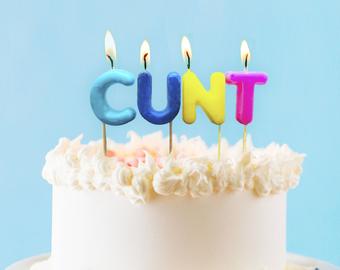
KoalaOnTheJuice
I don't think Max Weber would disagree.
KrondorMocker
getadogupya
Fairemont
I was thinking traitor
midwestmikey
Traitorous cunt.
LincLoud
Or Nazi
Fairemont
Id say he's not a nazi. His followers might be. He's just a traitor.
ParallelParkingInABurka
Very interesting, thanks for sharing! (and thanks for posting the whole article - I hate it when people only post the headline for stuff like this)
It's so endlessly frustrating that people have to suffer because of one deranged asshole's whims & have to watch their country being dismantled & plundered from within. And it's equally frustrating that I doubt the Democrats have it in them to mount the concerted messaging the article suggests.
Mehlbox
And trump isn't confined to the US. He tries spreading his style of regime worldwide - that's extremy worrisome...
Patrimonial regimes get along best with either vasalls or other patrimonial regimes. That would explain trump's efforts to break up the EU, a bureaucratic entity, and antagonizes China, another one. He does support Putin, who has the same style of regime, though...
michiyl
Interesting analysis - and if we look at these mentioned countries, it took decades to get rid of them. In case of Poland, you can see the immediate positive effects once the old corrupt system was gone (or at least successfully voted out), but you can still see the damage that was done. It will be interesting to see how a large country like the USA will react to it. Can the union hold together despite a federal government which actively disassembles itself?
ConnectToReality
Even after we cull the cancer, how long before people forget and vote the next moron into power?
Chemie99
You also require a functioning democracy and gerrymandering and corrupt USSC may well make the ability to vote out the criminals impossible (see Putin)
Mehlbox
I'm asking myself if countries sliding into Patrimonialism is a "natural" trend as simplifying reaction to an incredibly complex world; or if this is a planned exploit of a natural weakness of (uneducated, discompassionate) humans....
[deleted]
[deleted]
tEMPuSER632
Then look at Nixon, he too was a corrupt asshole who demanded personal fealty and took bribes. It was also during his administration we got the 'G.O.P. on T.V.' memo that paved the way for Fox News which has enabled the shitshow you are seeing today.
One notable passage said, "If the GOP had its own network, Nixon would never have been impeached."
Note that the idea of running non-corrupt candidates was never even considered, just covering for the corrupt ones they knew they would run.
SgtFumble
I`d say it is more like growing pains of a maturing society. Reality was probably always complex and as understanding and awareness grows, people have to get used to and learn to deal with new ideas. Someone (forgot the name) compared this to an extinction burst, https://en.wikipedia.org/wiki/Extinction_(psychology)#Burst . Also good job putting this together, interesting read.
Mehlbox
I would disagree - 100.000 years ago you had to navigate an environment of some dozens of square kilometres in search of food; had to handle social hierarchies in a tribe of maybe some hundred people; and trade interactions with very similar tribes around you.
Today, in a globalized, systemically interconnected, rapidly changing world of about 8 billion - unfortunately not so... ( https://en.wikipedia.org/wiki/Information_overload )
SgtFumble
That's pretty much what i mean. The effects described by quantumphysics were not in the awareness and understanding of the societies of that time, but they surely were present. And as these societies learned to deal with gathering food, getting shelter, clothing and so on, they unlocked new fields of discovery. So now we have to learn how to deal with information-overload, multimedia-influence, etc. and have it easy with food and shelter.
SgtFumble
Societies changed its rules and were better able to come to new ideas. So Patrimonialism is the older idea of society that now has a resurgence with Mango Mussolini joining Team Pootin in its struggle to fight off extinction.
KrondorMocker
But also https://imgur.com/49QzuE5
rogerjh
The thing is, business as usual is not going to cut it. Everything that the Democrats throw at Trump will be lambasted by the right wing media ecosystem (and spouted and regurgitated by his base and his sycophants and enablers) as fake or hoax. Until we address the fact that even the worst lies are protected speech, telling the truth, no matter how cogent is not going to be an effective strategy.
certainlynotaserialkiller
TLDR: fascist.
Mehlbox
Quite the opposite.
'Classic' Nazis would loathe Trumps style of governing: willfully lawless, openly corrupt and incompetent by design.
certainlynotaserialkiller
I didnt say nazi, i said fascist. Trump himself is not a nazi, everyone around him is.
StTriniansHeadBoy
“Even those who expected the worst from his reelection (I'm among them) expected more rationality.”
No, some of us took Project 2025 seriously.
Tforme22
💯 we did!! To see it all unfolding so quickly is mind blowing. Keep up the good fight and resist!!
rogerjh
Indeed. There is a subreddit focused on defeating P2025, but they were preaching to the choir sadly.
OliverOtter
That's an example of not taking it seriously. Taking it seriously would be taking your hits. Spending your time not in echo chambers but right-wing forums where you'll get insulted mostly, but maybe convert a few votes. Prioritizing goals and dropping some of the more controversial and/or left-wing policy wish list to get centrist and center-right allies who don't like P2025, but don't like some of your other goals either.
tenkindsofawesome
America is like the Titanic. Too big to turn, too slow to react, in denial about sinking, and there aren't enough lifeboats for everyone.
cepacolusmaximus
and all of us are either trapped below decks, or we're in the band, forced to keep playing.
MoodyMagpie
You forgot the lower classes have no chance of survival.
The701
(well i mean...they did say "there aren't enough lifeboats for everyone," so, yeah?)
lonelyrangerofthedreams
Nice metaphor. It fit greatly actually.
BigRedNerd
TemporarilyEmbarrassedThousandaire
cearn
And they're also sabotaging the lifeboats that do exist (except those they're already on)
TheCarolingian
Trumps Cronies and Bootlickers to the Lifeboats first.
drgonzo67
After having drilled a few extra holes in the hull, just in case the iceberg isn't enough...
Lashiel87
And just like with the Titanic, not dealing with the situation head on is what killed us. If the Titanic had hit straight on it would have been damaged but survived, it was the half measures of turning insufficiently that allowed the ice burg to rip an irreparable hole in it. We as a country should have dealt with him head on.
madeejit
(The Captain), (as it sinks) "This'll make great TV some day"
DarthVaderDidNothingWrong
And too many in the political sphere rearrange the deck chairs while arguing over the best placement of knife and fork on the dinner table
yalczero
Or are actively sabotaging any lifeboat that isn't theirs.
Hammertulski
As a musician, I know my place. Good luck, y’all.
LogicalLimes
hahah In college, I successfully argued against a professor about how rearranging the deck chairs could have been useful in making it more safe and orderly to reach the lifeboats. 🤣 But, point taken and agreed! 😊