
willpwrbcn9

95895

3458

65
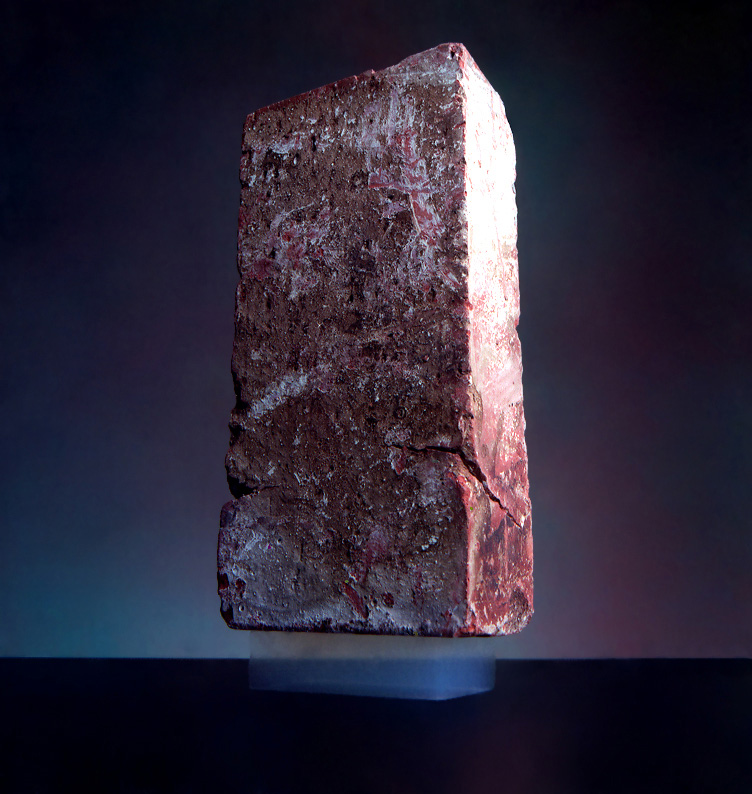
Chinese material scientists have created the world’s lightest material: A graphene aerogel that is seven times lighter than air, and 12% lighter than the previous record holder (aerographite). A cubic centimeter of the graphene aerogel weighs just 0.16 milligrams — or, if you’re having a problem conceptualizing that, a cubic meter weighs just 160 grams (5.6 ounces). The graphene aerogel is so light that an cube inch of the stuff can be balanced on a blade of grass, the stamen of a flower, or the fluffy seed head of a dandelion (see pictures below).
Most aerogels are produced using a sol-gel process, where a gel is dehydrated until only the aerogel remains. Some aerogels are also produced using the template method — aerographite, for example, is created by growing carbon on a lattice (template) of zinc oxide crystals — and then the zinc oxide is removed in an oven, leaving just the carbon aerogel. To create the graphene aerogel, however, researchers at Zhejiang University use a novel freeze-drying method. Basically, it seems like the researchers create a solution of graphene and carbon nanotubes, pour it into a mold, and then freeze dry it. Freeze drying dehydrates the solution, leaving single-atom-thick layers of graphene, supported by carbon nanotubes. The researchers say that there’s no limit to the size of the container: You could make a mini graphene aerogel using this process, or a meter-cubed aerogel if you wish.

The end result is an aerogel that weighs just 0.16 milligrams per cubic centimeter, and has truly superb elasticity and absorption. The graphene aerogel can recover completely after more than 90% compression, and absorb up to 900 times its own weight in oil, at a rate of 68.8 grams per second. With these two features combined, lead researcher Gao Chao hopes that the material might be used to mop up oil spills, squeezed to reclaim the oil, and then thrown back in the ocean to mop up more oil. Beyond filtration, graphene aerogel might be used as insulation — or, if it’s as conductive as aerographite (which seems likely), graphene aerogel could enable the creation of lighter, higher-energy-density batteries.
Over the next few pages we’ve compiled some amazing photos of aerogels. Click through if you want to see lumps of carbon balancing on a blade of grass, centimeter-thick slabs of aerogel that can insulate against the blue flame of a Bunsen burner, or a two-gram piece of aerogel that can hold up a 2.5-kilogram brick,
Source: https://www.extremetech.com/extreme/153063-graphene-aerogel-is-seven-times-lighter-than-air-can-balance-on-a-blade-of-grass

Chinese material scientists have created the world’s lightest material: A graphene aerogel that is seven times lighter than air, and 12% lighter than the previous record holder (aerographite). A cubic centimeter of the graphene aerogel weighs just 0.16 milligrams — or, if you’re having a problem conceptualizing that, a cubic meter weighs just 160 grams (5.6 ounces). The graphene aerogel is so light that an cube inch of the stuff can be balanced on a blade of grass, the stamen of a flower, or the fluffy seed head of a dandelion (see pictures below).
Most aerogels are produced using a sol-gel process, where a gel is dehydrated until only the aerogel remains. Some aerogels are also produced using the template method — aerographite, for example, is created by growing carbon on a lattice (template) of zinc oxide crystals — and then the zinc oxide is removed in an oven, leaving just the carbon aerogel. To create the graphene aerogel, however, researchers at Zhejiang University use a novel freeze-drying method. Basically, it seems like the researchers create a solution of graphene and carbon nanotubes, pour it into a mold, and then freeze dry it. Freeze drying dehydrates the solution, leaving single-atom-thick layers of graphene, supported by carbon nanotubes. The researchers say that there’s no limit to the size of the container: You could make a mini graphene aerogel using this process, or a meter-cubed aerogel if you wish.
Front page!! Thanks: please send bitcoin address: 3PMqJNfcoFFDLCketvkoSWvaHsrxC1kM1b
DarkAngelWarlord
thats great but what are commerical and consumer uses for this I mean What the hell could an average person like me do with it
FubinacaZombie
#1 looks like the Borg
flavivsaetivs
This is an underrated comment.
PersonalDildo
Ah god I hate how lazy this post is “through the next few pages” for fucks sake be less lazy about it
Mimsey
I hate that every time something comes out of China people make a big deal about China. Most other countries don't get such treatment.
HugoDrax
Original article is 5 yrs old. Has there been any recent development?
scubachubby
graphene is cool but comes from graphite and that supply is not endless. china has the most natural graphite and is selling it
CreamNinja
Can graphene be only made from natural graphite? Can't find any good sources on it atm
CanIHaveThisUsername24
Idk how big a cubic meter is but neat
HypnoChanger
It is not lighter then air. Helium is lighter then air. You know what something filled with helium does? Which this does not do?
HypnoChanger
Did some research on it, and it's bad math. They say it's lighter than air because they are measuring only the weight of the gel and not 1/
HypnoChanger
the air in the pores for it's actual weight, but are including the air in the volume. Resulting in an incorrect measurement of mass.
PrimePowerOn
What the fuck does seven times lighter than air mean. Words meant to seem impressive / while communicating to the layman but are meaningless
The701
Yeah, I see that a lot in online articles. I can only surmise that fractions terrify a lot of people.
PrimePowerOn
Does it actually mean 1/7 the weight? Well that's a very silly way of saying that simple fact. Thank you.
djangojazz
Very cool. I have so much respect for the engineers and scientists that work on this technology.
SquawkBoxIT
What is this actually used for besides getting internet points?
DavidHoag
Wasn't this like 5 years ago? Still cool, but it's made to sound like it just happened.
flavivsaetivs
Oh man how did I miss this post? I work with Graphene.
UnflippedCoin
Guys...Girls...Its below the brick :P
Thisismyusernamenotyoursitsmine
April 10, 2013......
Periah250
Finally weights for me
ideagrinder
Aerogel has existed for a while OP
MillenniumFalcon
Graphene is effing amazing
ArdentSlacker
I think the really fun thing to do with this, insulation/structure for a house. Before you move in, pick it up and shake it! :D
MrRandom93
Sooo super liggtweight batteries?
VictoryWine
You just copy and pasted the same 2 paragraphs.. Twice. Nice.
WhatzitTooya
5 Year old news tagged under current events...
donotlookatthelight
Science is tight. Can someone give me some potential uses? Is it a good conductor?
flavivsaetivs
Graphene is a Zero bandgap Semiconductor, Superconductor, Insulator, Thermal Conductor, etc. etc.
flavivsaetivs
We're still working on Graphene transistors though.
flavivsaetivs
It's applications are effectively endless when composited with other materials or doped with metal oxides or the like.
jonkmc
If you throw it in the ocean why would it soak up oil instead of sea water?
LeeroyTheBird
Because science? Just kidding, I have no idea. I wanna know the answer too, though. Maybe because it's thrown onto the oil and not water?
flavivsaetivs
Probably because it's Graphene and not Graphene oxide so it's hydrophobic.
fiddlelajman
How can you balance it on grass if it's lighter than air?
fiddlelajman
Let me try. If you cut, say, a cube and don't count the trapped air inside is 7 times lighter than the same cube made of air.
Eikre
You can do that exercise with literally any material.
willpwrbcn9
There is a huge amount of empty space in aerographene (and other aerogels). However this space is filled with air hence why it doesn't float
HypnoChanger
That's not how that works. A porous buoyant object still floats in water even if fully soaked in water.
fiddlelajman
Nice explanation, but still I'm confused. However huge of a space is filled wit air, that leaves the volume that's lighter.
ABlindman1
When a boat displaces all it's water it's lighter than water.
SinStar87
From the explanation I'd assume the material itself isn't lighter than air but when the empty space isn't filled it is.
ElioNope
Material is denser than air, but the structure it forms has gaps. Like how helium balloons are lighter, but the balloon itself isn't.
BillNyeTheCrackShopGuy
Did a calculation and it would actually float if you fill the void with hydrogen and seal it. Would still lift upto 1 kg /m^3 normally.
dannakala
So the aerographene is not lighter than air (in the same way that a latex balloon is not lighter than air). The helium is lighter than air
Whailes
no, I believe that it is lighter that air, but it contains air that pushes it downwards, just like when you put a plastic container fulled >
ElioNope
Yep.
Nirnias
I want to see this under the hydraulic press
LeeroyTheBird
Me too. If you find a video, please share.
flavivsaetivs
You'd be disappointed. Graphene's fracture toughness is only like 1.3 MPa. That's the problem with using it for structural applications.
whyihavetoeven
I like the '100x stronger than steel' without anything concrete.
flavivsaetivs
It is. Its tensile strength is 130 Gigapascals while steel's is only 350 Megapascals (so 300ish times stronger)
flavivsaetivs
https://www.nature.com/articles/ncomms4782
flavivsaetivs
But that's *perfect* graphene and graphene has imperfections. Its fracture toughness is only 4 megapascals, while steel's is 50.
Silwerbullet
If they can make spacecraft out of this we could go to space with almost no propulsion.
Dramacian
Watch out for Space Bat, could ruin the launch.
IamNICE124
Too soon.. RIP Space Bat.
purdhapley
Ya, we could Randy Johnson to throw us into space.
Otterhendrix
Just watch out for birds prior to launch.
UnknownSquid
Space craft are already 95% thrusters and fuel, with 5% tinfoil and match sticks. Might be a good material for station habitats though.
RandomAbscessMemories
Reducing the payload weight DRASTICALLY reduces the fuel needed and thus the overall mass, though.
UnknownSquid
True, true. Any viable reduction in weight at any stage is certainly valuable. I was just contending the "almost no propulsion" bit.
bomboy23
Like the giant acme rubber band that the coyote used?
Cloud8andahalf
No matter the density, once in vacuum, gravity will pull it back to earth. Space (earth orbit) is more about speed.
MechanusIncarnate
It is porous, air can move through it.
MadHakon
I'm guessing the material isn't airtight, so I suspect there would be many limitations in that use.
flavivsaetivs
It is airtight, it's one of the few materials that hydrogen can't permeate in fact.
UnknownSquid
Wrap it in cling flim then.
whippedmemes
And think of the other things too, bullet proof vests, construction, medical equipment. Could be a game changer!
ultravioletregulator
Well...there is that issue of crew and equipment. Haha
Grunwald
But wouldn’t humans and electrical components etc add weight anyway?
treefrog
Sending humans to space is stupid anyway. Like sending a fridge of meat. Just copy us onto a future cell phone and send the phone.
bubsassian
YES, however anything is possible in USSR
digme
Next project is humans made of aerogel.
ravnicrasol
We'd still be reducing the rocket's weight by a massive margin. And when every pound counts, that is an incredible boon.
StrayBullet
With technology getting smaller and lighter, it would be like tying a rocket to your desk chair.
eyeLied
So...we shouldn't do it. Got it.
suazobomber
I guess my question is: can this material stand the rigors of exit velocity and possible reentry?
Smge
Almost certainly not I'd say, and problems arise when you consider that we still need to make the engines and fuel tanks out of metal
valen00
As a slave scientist, no, that's not how it works
Fedotia
How do you study slaves?
valen00
FML, space scientist
Fedotia
Interesting lapsus tho.
Nemothenubbed
He mostly does field work
Daphault1
Want to sign up as a subject and I'll show you?
Fedotia
Does it has better benefits than what my current taskmaster offers?
flavivsaetivs
The issue is Graphene has terrible fracture toughness, so if you hit it with things it turns into flakey dandruff, basically.
GreenRosetta
It's China. They stole the patent and intellectual property from the first creators.
owlest
source?
flavivsaetivs
The problem is the US does the early research publishes it for all the world, and China does all the late-stage research that makes products
flavivsaetivs
They didn't steal it. Graphene research is academic, Academic research has no patent or intellectual property rights.
GreenRosetta
Stolen. Tech. China steals tech and int. property as a matter of course
flavivsaetivs
It's not stolen, it was published in scientific journals. Anyone is free to do what they want with it provided they put a citation.
flavivsaetivs
Our research team made Graphene-MnO2 supercapacitors. Someone is perfectly within US intellectual property law to make them and sell them.
Mayonnaiseisainstrument
If it is lighter than air, why it doesn't rise up?
Farrit
Because it's still more dense.
WoTLert
It doesn't rise up because it's filled with air, not empty. Same as if you'd fill a basketball with water and throw it in the ocean.
Pablotheshark
Good analogy.
terimaki
Whailes
Aweins
TheNonInsestuousJaime
Cause he's a dense motherfucker
DavidBrooker
I'm imagining their 'weight' numbers are after byouancy. ie: not weight
digme
Because the man is keeping it down.
atcggcta
The air is a platypus
ThisGuyHere
For fear of a long drawn out war with the government. It's happy enough in its current state. It doesn't want it's kids to inherit their war
Shamalamadingdongz
there is a brick on it
NotIrony
Surface area/buoyancy
Resurrectionist
It *would be* lighter than air, if there was a vacuum inside, but there's not.
Jaboticaba
It's waterlogged with air
AutisticReindeer
HypnoChanger
Bad math. They are counting the air as part of the volume but not as part of the mass, resulting in an incorrect measurement.
FallingStar7669
The Flying Spaghetti Monster restrains it with His noodly appendage.
Khrome
Could be that brick sitting on top of it?
Carefuler
Because OP doesn't know what he's yammering about.
LeeroyTheBird
If you're gonna call out OP, don't be a coward about it. Here, I'll do it for you. @OP
ElioNope
It's not lighter than air. Instead, it has huge voids within its structure, so the whole *structure* is lighter than air. Just like a (1/2)
ElioNope
Helium balloon is "lighter than air", but the balloon itself actually isn't.
Peptido
Except that a helium balloon collapses under its own weight in a vacuum.
ElioNope
Right, so what we've got is something denser than air and far stronger than a balloon.
Peptido
No, 1 cc of aerogel evacuated of air weighs less than 1 cc of air. 1 cc of rubber doesn't
Imgazorpazorpfuckingfieldbitch
It's shy
BackgroundCharacter
It's not usually like that!
DefinetlyNotARussianSpy
but it's never done that before
BallisticPenguin
Just like my pp
Cranbananarama
It hasn't had its coffee yet.
Pablotheshark
It's a good Christian material. Getting high is out of the question.
vowofloudness
The hard parts (graphene nanotubes) are denser than air, but if you sucked all the air out and sealed it, it would float. Like a zeppelin.
Mishn0
No, it would collapse under the 1 atmosphere of air pushing in on it.
CobraEatsSky
No, it would rock. As in Led Zepplin.
just4thelolz
That's exactly my problem with the statement. If they can prove that it won't collapse, then I'll be impressed. Otherwise any material 1/2
just4thelolz
could in theory be "lighter than air". 2/2
Mishn0
but first, the material it would take to cover the surface to make it air tight would make it heavier than air. It's like a sponge.
vowofloudness
Both totally true. I was just explaining what is meant by "lighter than air", didn't mean to imply you could actually make it float.
Peptido
So put the whole thing in a vacuum chamber, you bozo
Mishn0
Wow. Then there's no air for the substance to float in. You're not very good at science. A thing floats because it masses less than the >>
Peptido
lol I meant to respond to a different comment, the overarching idea being discussed is its density with air evacuated
Peptido
I'm pretty good at science, imgur comments just aren't a great way to have meaningful discussions. Shit gets jumbled/misplaced
Mishn0
same volume of the fluid it's put into. Vacuum has no mass so the graphene would not float in it. Unless you have it in a weightless >>
IsTheDystopiaHereYet
It hasn't gained a sufficient anger at the bourgeoisie.
lagavulin16
Easy fix, just introduce it to imgur.
Kelryn42
This should be getting so many more upvotes than it has.
ImgursLibertarian
DAMN! It is immune to being thrown out of a helicopter.
bubsassian
*communism insceases*
willpwrbcn9
There is a huge amount of empty space in aerographene However this space is filled air hence why it doesn't
nihilistdad
Well how is the material's volume measured then? You can't count the empty space if it's accessible for air.
chargeling
Mh, is it strong enough to support atmospheric pressure? Could you wrap it with a thin plastic film and pump all the air out?
ChrisBronson
Ah like sponge soaked with water is why it doesn't float
applecatvictory
How is it 99.8% air and 7x lighter than air? I might be bad at math but how can 1/500 of the material make that much difference?
isitmyturn
I wonder whether it is strong enough to withstand air pressure - if so, a balloon filled with this stuff wd be lighter than air if evacuated
zyxzevn
Well, the picture says it is 100x stronger than steel..
arbsbuhpuh
Spider webs are also much stronger than steel cables *by thickness*. But it's a 1/4in steel cable is cheaper than a 1/4in web cable.
UnknownSquid
That's the obvious thought that comes straight to mind for me. I can only assume the answer is no, otherwise we'd surely be seeing...
UnknownSquid
2) demonstrations of it, or at least talk about that potential, but it makes you wonder doesn't it.
DavidMadsen
Is it strong enough to withstand the air pressure if it were created in a vacuum?
ChimneyImps
If it's filled with empty space that space should not be counted as part of the volume when computing the density of material.
ChimneyImps
That's like trying to compute the density of cardboard by using the volume of a cardboard box.
Peptido
No it isn't, it's like computing the density of corrugated cardboard itself. You can't discount the structure of the material.
DavidMadsen
So it's like saying that "steel is lighter than water because a steel balloon will float on it"
Peptido
No, it's like saying some particular structure made of steel is lighter than water.
Yakeshinu
Yeah, there's a lot of incorrect/incomplete "science" here. "Great thermal conductor" =/= good insulator. :D
arbsbuhpuh
If it was truly lighter than air, it wouldn't matter how much air (uncompressed) was inside, it would still float. 1/2
grantavius
Blow up a balloon with your lungs. Does that balloon float? The ratio of air to LTA gel is too high to float.
willpwrbcn9
https://physics.stackexchange.com/questions/71069/if-aerographite-is-lighter-than-air-why-doesnt-it-float
Lionskull
oh, it's a word play. it's not less dense than air, it's lighter than air, the same way an aircraft carrier is lighter than water.
MichaelAndersen88
They posted its net weight and density in air, not its total weight and density in air.
Eikre
Which means it is not lighter than air.
PersonalDildo
Oh i just realized, we’re only talking about weight, not density, entirely possible that it’s more dense
Eikre
That would be an utterly incoherent value, though. Absolutely everything weighs both more and less than air, if the amount is arbitrary.
PersonalDildo
That’s my point, you need to know density to figure that point out
arbsbuhpuh
2/2 lighter than air + air = still lighter than air
previoustopcomment
Boats by volume are lighter than water, boats filled with water sink.
ChimneyImps
Only if you take the volume of the boat including hollow areas and not the actual mathematical volume.
[deleted]
[deleted]
arbsbuhpuh
It doesn't have "double air".
PersonalDildo
But since it’s lighter than air, the heavier air would float under it, the item would have buoyancy
arbsbuhpuh
3/3 I now read how it's lighter than air but I still don't understand. I don't see how "lighter" + "what it's lighter than" doesn't = float.
[deleted]
[deleted]
ABlindman1
So a boat displaces water in order to get it to float, this allows air To flow freely through it like a foam, so it doesn't displace any.
ZuIthar
The material vitself is not lighter than air, however the density of the structure it is arranged in makes it so it is lighter per volume
thedadwhobeatshiskidwithjumpercables
What they are saying is a meter cube block of this stuff with no air in between is lighter than a meter cube block of air.
legofham
So the air inside it is weighing it down?
TypicalGayMan
Kind of like why boats sink when filled with water
dannakala
No, the aerographene itself is heavier than air, too. The lighter-than-air misnomer comes from if you filled it with vacuum, it would float.
BillNyeTheCrackShopGuy
But filled with vacuum it would just collapse to a density still heavier than air, caused by the air pressure.
dannakala
as would a box of sufficient volume and thinness made from any material (lead, steel, old terrycloth towels)
Btint11
Actually any object in a vaccum would never float because there is no bouant force to lift it up
ulvitron
I like the materials you selected as an example.
Pala2
As would the Eiffel tower
CassiusPolybius
Vacuum-based airships are a fascinating, if unfeasible, idea.
MaybeIamTheDragonbornJustDontKnowItYet
Would it be feasible with this gel, where you remove the air, while the graphene / gel gives stability to the structure?
willpwrbcn9
Exactly
PotooGeatAndWise
Cool
ProxyPlayerHD
so if we fill it with Hydrogen or a vacuum we get self launching rockets.
Sabruka
Unless I'm mistaken its overall density is such that it would still float, no? Since total density of closed system would still be lesser?
BillNyeTheCrackShopGuy
Yes, and that shows you that in fact its not lighter than air. Thats because gaphene is solid on microscopic level.
Texantioch
BILL BILL BILL BILL BILL
Btint11
You know you can't discount the air inside it for mass and also count the air in calculating volume
gayerthanacavscout
Fuckin brilliant.
WWisLife
I had the same question. Thanks @OP for explaining it so I could understand an not being a dick about it.
willpwrbcn9
No worries glad to help :)
Thoraxe123
So in that case, would it float in a vacuum? Or would it compress in on itself?
holyv
It will not float in vaccum because the bouyancy force requires there be a heavier fluid-oil floats on water but not in a regular bottle.
willpwrbcn9
Good question, I don't think it would float as gravity is still acting on it but possibly, and I would assume it would compress slightly
Ginkawa
what would it float on in a vacuum?
SirButcher
Imagine air as it would water. This thing is light because of almost same density as water. If you remove air, then nothing keep it up.
Azcheron
Well in a vacuum there'd be no air to 'float' on, so it would just fall due to gravity.
CmRock136
Nothing floats in a vacuum if it’s a vacuum on Earth. Only objects in space (a vacuum) float due to the absence of gravity.
holyv
It wont compress on itself in vaccum because the compression comes from isostatic pressure-from the air around. No air=no pressure