
ParallelParkingInABurka

127579

4965

57

In today’s episode: The Kardashians of the plant world and other vegetative disappointments.
First up: liquorice.
Liquorice is gross and made from twigs:

Hahaha, just kidding, don’t be ridiculous.
Those are obviously roots.
The liquorice plant, Glycyrrhiza glabra, is a legume, grows up to 1.5 meters (5 feet) tall and looks like the most pedestrian of bushes:

It takes between two and four years before its roots are ready to be harvested, during which time they grow up to 3 tangled meters (10 tangled feet) long. Come harvest time, the plants are cut down, the soil is turned over and the roots are pulled out:

They’re chopped up and boiled to extract the sap, which contains anethole, the chemical compound most responsible for the typical liquorice flavor.

Most supermarket liquorice contains only a tiny amount of real liquorice, though. Instead it’s often flavored with something else that contains anethole: anise oil. This is made from two very similar tasting yet entirely unrelated plants, star anise and aniseed.
Star anise likes to pretend it isn't gross by looking very pretty:

It comes from the Illicium verum tree, difficult to cultivate and slow to mature, flowering only after 6 years:

The part that we use as a spice is the pericarp, the outer layer of the dried fruit:
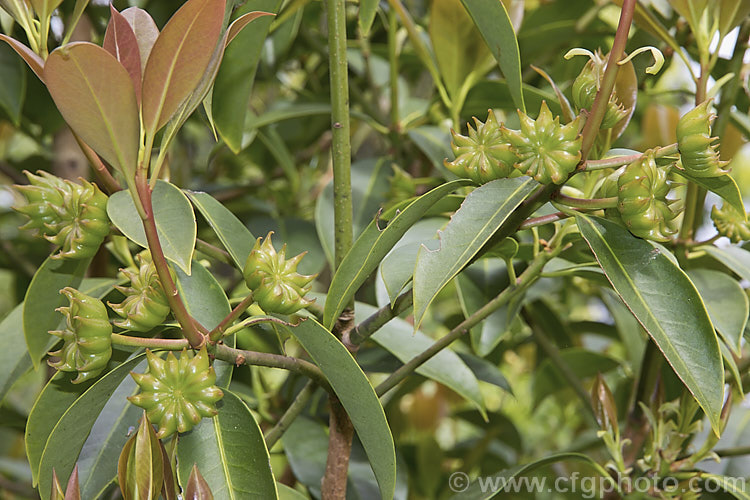

It still contains the seeds ‒ unless they have fallen out at some point, which I always thought meant that the flavory part was gone, but turns out it’s in fact the pericarp itself that contains most of the flavor, so that’s good to know. In powder form it’s one of the ingredients in Chinese five-spice, but on its own it’s usually sold whole and used like a stick of cinnamon: you add it to whatever you want to flavor and fish it out at the end.

As of 2006, however, 90% of the annual Chinese star anise harvest didn’t go towards cooking at all.
Instead, they were bought up by pharma giant Roche to extract the shikimic acid needed for the manufacture of their bestselling flu medicine, Tamiflu. But harvests can be fickle and demand can rise, which led to a shortage of Tamiflu during the birdflu epidemic of 2004. As far as I was able to find out, no viable large-scale synthetic replacement has been developed since*, so Roche is most likely still the #1 buyer of star anise in the world. The more you know!
(*ETA: thanks to @LynerBarsett, who just told me that in 2006, 30% of shikimic acid came from E. coli, so there IS a large-scale alternative. We don't know about current numbers, and they DID still buy all the natural stuff back then, so they might still be #1. Or not.)
Don’t start eating star anise to combat the flu, though, the acid is just a step in the production, not an active ingredient.
Also, don’t go picking the fruit off any random star anise tree you encounter in the wild, there’s a lot of toxic varieties (one of them grows in Florida, so you can see how that needed pointing out).
On to aniseed which, despite its name, is in fact not the seed but the tiny dried fruit...

... of the anise plant (pictured here in white but also comes in yellow):

Aniseed is native to the Eastern Mediterranean region and Southwest Asia. It’s one of the oldest spices we know and has been cultivated for about 4,000 years.
It’s what flavors all those mediterranean spirits like ouzo, raki, arak, pastis and sambuca (as well as absinthe) because due to a terrible oversight nobody ever asked me if that was a good idea.
In case we’ll ever be able to go to parties again, here’s something for your small talk arsenal: it’s the anethole in those spirits that is responsible for the „ouzo effect“ where a clear alcohol goes cloudy when water is added. Spontaneous microemulsion, baby! Surefire panty-dropper.
Aniseed is part of the Apiaceae family, which is just about my least favorite family in the plant world. They’re a lot like the Kardashians in that regard, also in that everybody looks alike and is kinda gross. Please note my restraint in not spelling them all with a k.
There's cumin:

Caraway:

Coriander:

Celery:

Dill:

And fennel (there’s more, like parsley and carrots, but I’ll give those a pass):

Like aniseed, all of these are commonly called seeds but are actually tiny dried fruit.
Also like aniseed, they all went and ruined themselves with varying levels of anethole, most notably fennel, the big dummy. Cumin might possibly be the only holdout but I honestly think it’s more likely that the internet just gave up and doesn‘t know.
Because humanity never fails to disappoint, our forebears decided that, out of ALL the plant families, this one was the one we needed to eat more of. (To be fair, unlike the Kardashians they’re actually good for you, especially the seeds, with a myriad of health benefits that have been put to medicinal use for millennia, and apparently some people even LIKE them, but still. Not cool.)
So everyone who went „WTF, that’s not celery!“ up there, hold your horses:
We also eat the celery stalks...

... as well as the root, called celeriac (botanically not actually a root but a hypocotyl, which is short for hypocotyledonous stem, but there’s no way I’m reading up on THAT for CELERY):
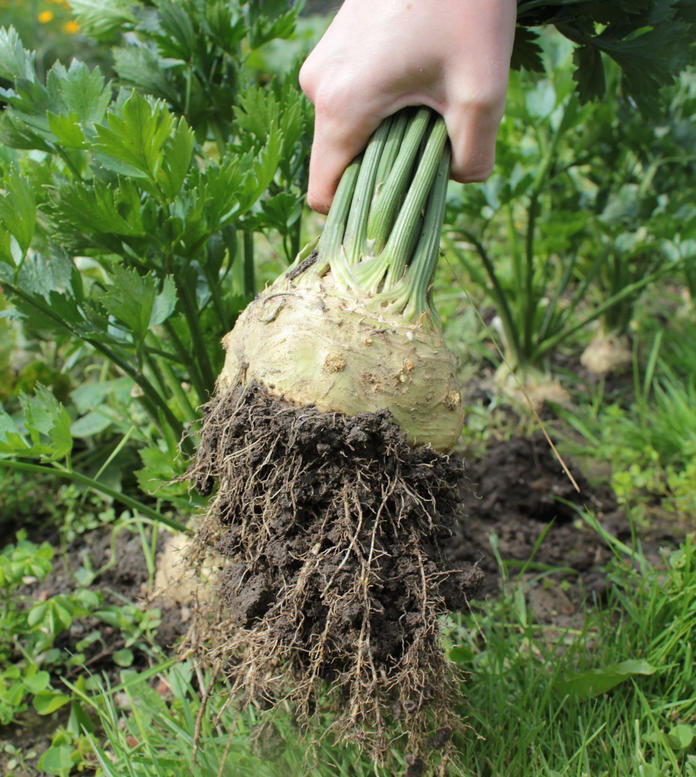
As you can see, they’re from slightly different cultivated varieties. Use and prevalence varies, the US for example is big on the stalks, Germany mainly uses the roots. They taste very similar but have very different textures, so they’re mostly only interchangeable in stews and soups. My ignorance of the celery habits of other countries lets me live in the fantasy that they’ve smartened up and don’t use it at all. Don’t burst my bubble.
With fennel, we eat the bulbous leaf base...


... but the feathery green leaves can also be cultivated as a herb (same as dill, whose leaves look pretty much identical, so I’m not posting a picture. Suck it, dill).
And finally, there’s coriander leaves, known as cilantro in American English (coz Mexican food), which are so awful they’re both the Kim AND the Kanye of the family.
This pic shows the typical young leaves as well as the more feathery mature ones:
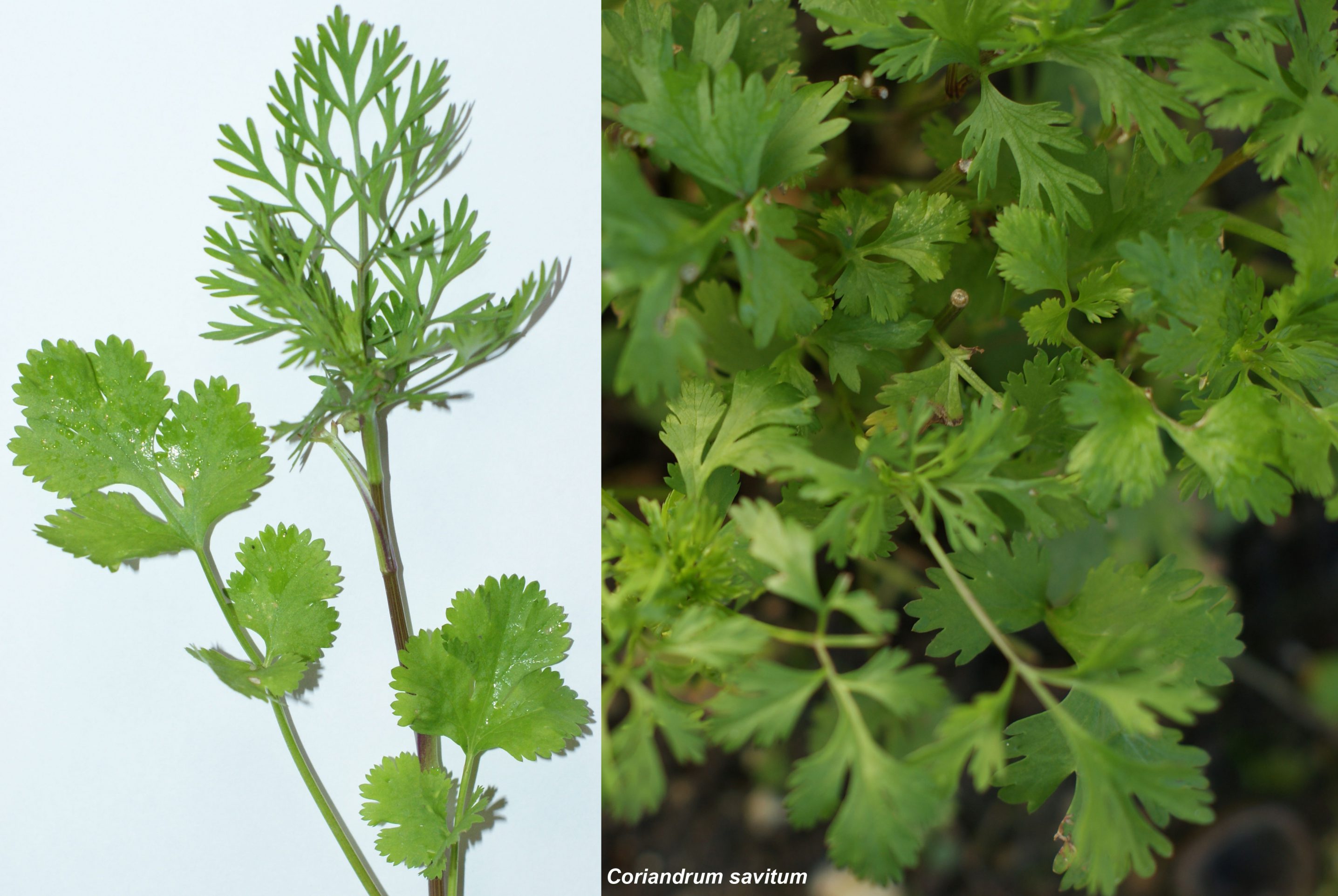
Depending at least in part on your genetic make-up, cilantro either tastes fresh and fruity (so I hear) or moldy and dirtlike (so I read) or overwhelmingly, unbearably, disgustingly like soap (so I know, as you can tell by the adverbs).

The exact science behind this is unclear, the most likely culprits are currently thought to be genetic variants of olfactory receptor genes. It seems that people who hate cilantro are both more sensitive to the soap-like aldehydes in cilantro as well as potentially less sensitive to its alleged more pleasant aromas.
All I know is that I’ll be over here praying this doesn’t turn out to have been a prophecy:

Well, I didn’t like ANY of that.
Let’s go look at some almonds instead and hope they’re actually nuts for once.
They certainly look the part:

Almond trees, Prunus dulcis, are famous for their pink or white blossoms. See, star anise? You can be pretty without being a fraud.

Native to the Middle East, almonds are cultivated in climatically suitable regions all over the world, with California alone producing a whopping 80% of the world’s almond crop.
The following is a straight quote from Wikipedia but it’s so insane it was just too good to pass up: „The pollination of California's almonds is the largest annual managed pollination event in the world, with 1.4 million hives (nearly half of all beehives in the US) being trucked in February to the almond groves. Much of the pollination is managed by pollination brokers, who contract with migratory beekeepers from at least 49 states for the event.“
POLLINATION BROKERS, YOU GUYS. I know what *I* wanna be when I grow up!
Almonds start out green and fuzzy...


... and as they age their outer mantle splits open...

...until they’re ready for harvest:

How are almonds harvested, you ask?
You shake the tree until they fall off.
Look, I don’t make the rules, sometimes the simple way is the best way (olives and pistachios are harvested this way too). Small outfits shake the branches with long sticks and put tarps beneath the trees to catch the almonds. Larger farms rent or own machines that shake the whole tree, as well as so-called sweepers, machines that drive through the grounds and sweep all the fallen almonds into long rows where they’re left to dry in the sun for a week before being gathered up for further processing:

So, are almonds botanical nuts or what? Seed inside a hard shell, yes, looking good, looking good, but wait, surrounded by a fleshy part that splits open as it ripens?
Aw poop, just a drupe.
This is getting ridiculous. Time to start a nut count:
Nut or Not?
Nut: 0
Not: 5 (4 drupes: cashew, nutmeg, pistachio, almond; 1 legume: peanut)
Hrmph.

So turns out the whole business about what exactly defines a botanical nut is way, WAY more complicated than I thought. Like, I’m over here getting cinnamon flashbacks while reading about indehiscence and involucres and plant embryos (I DIDN’T EVEN KNOW PLANTS HAD THOSE) and just when I think I finally got it, it turns out botanists aren’t even entirely sure themselves.
So, serious request, if there are any botanists on imgur, please shoot me a DM, I have QUESTIONS. I just want to be able to explain it in a way that’s factually correct but won’t make peoples‘ eyes glaze over. Or I can’t write about nuts anymore, which would make me sad because I don’t think they let you become a pollination broker if you’re already a cat tax.

*thousand yard stare*
-------
Previously:
Vol. 1: https://imgur.com/gallery/Sa2qVJQ
Vol. 2: https://imgur.com/gallery/1f1JZM4
Moar:
Vol. 4: https://imgur.com/gallery/LcqzWqO
Vol. 5: https://imgur.com/gallery/a9JyTgq
Vol. 6: https://imgur.com/gallery/rQafyGD
Vol. 7: https://imgur.com/gallery/XaDGEOD
Vol. 8: http://imgur.com/gallery/7HL4A6t
------
FP edit: Nut fiends, rejoice! A real-life botanist has offered to answer all my nutty questions! Thank you so much & I'm sorry in advance, @BestRaccoon.
FeChefImgur
Never knew the genetic thing about cilantro, probably explains why I dislike it so much.
JackOfAllTirades
I’m quite the fan of licorice. However, I contend and fully understand why no one else does, and wholeheartedly defend their decision.
wolfmann777
Yep. The black jelly beans are always mine.
JoSTL15
Thanks! Was a nice read instead the name calling posts flooding Imgur at the moment.
InsincereSam
This was really, rather unexpectedly, fantastic! So well written too, the humour really... spices... it up. And corriander is delicious.
ParallelParkingInABurka
... juuuuust as I was gonna say thank you and upvote, tsk! Nah, jk, +1
GRMM
Really one of the most interesting things I’ve ever seen on here. So great. Thanks OP
McMastered
What an awesome way to tell about nu... stuff. I enjoyd this immensely!
ParallelParkingInABurka
Blightlance
I think you hate liquorice about as much as I enjoy it @op Salty liquorice is my favorite!
EyeSpyABreathtakingPerson
I read this 12% for content (which was great don't get me wrong) and 88% for your fantastic writing. Thanks, @OP. #cilantrodidnothingwrong
ParallelParkingInABurka
I'll take it, thank you! ? Not that hash tag, though...
whooshby
I thought this was going to tell me how to make licorice and you got ADD-sidetracked. Cool post.
ParallelParkingInABurka
Honestly, that's probably what would happen.
truemetalman
Caught you in usersub!
ParallelParkingInABurka
sesamesnapsinhalf
Very informative. Thank you!
boshbashbish
I eat coriander that my mum grows in her garden. It tastes DIVINE! She puts it all her curries also.
REALLYREALLYRIDICULOUSLYGOODLOOKINGMALEMODEL
This is all fantastic, thanks OP! Upvote and favorite, and now i need to do the same to volumes 1 and 2.
ParallelParkingInABurka
Litlikejoanofarc
This was so interesting, you are a marvelous teacher. Teach me baby, make me learn.
ParallelParkingInABurka
Thank you!
nebuchadnezzarispooping
I am following you @OP. Next time you post something interesting as this I'm reading it passionately
LurkLurkGoose
I, too, have decided to follow @op based on this post.
ParallelParkingInABurka
I'll hold you to that (somehow)!
fishrfrandznotf00d
@parallelparkinginaburka maybe you should
ParallelParkingInABurka
gordy77
Cilantro tastes like soapy steel wool. I wouldn't even know what it's supposed to taste like. It ruins everything its in.
ganzuul
I like licorice. And salmiak. ?
UWAGAGABLAGABLAGABA
I like all the things in this post- except for the nasty cilantro. I got the soap gene.
greggor
Hopefully your don’t pass it on to anyone else. Cilantro is the best thing to ever happen to Mexican food.
UWAGAGABLAGABLAGABA
Am gay. The bloodline ends with me.
deimosVII
Nothing better than drop
HeretiCorpHasAnDFAcannon
Yup, flavour of life.
Sotha
BrazilianThunderPanda
I love your emotional commitment to the subject matter.
ElbowDeepInUserSub
I think that finding out that there is no such thing as a nut, can be fairly traumatic. I need air.
Dahliaisahedgehog
ParallelParkingInABurka
naturesfool
Ew, David (luv u, OP)
ParallelParkingInABurka
SuicidalBallsack
I just started watching this and David is my favorite. His reactions are the best!
ParallelParkingInABurka
David is what got me hooked and kept me watching through the first couple of seasons. He's the best!
mariomario42
#JusticeForDill
ParallelParkingInABurka
NEVER! But you made me laugh, so +1.
Thesaya
Every single other thing that you listed up until almond is horrible, but then you go and include dill. Dill taste nothing like the others!
ParallelParkingInABurka
That is so funky! You hate everything mentioned but not dill? So interesting and weird how taste works.
Thesaya
Actually, not cumin either, thought it was cardamon. It is possible it is because those are staples in Sweden
Thesaya
But then again, I hated licorice from the first taste, so not likely. They just taste different than the similar ew of the others to me.
maelennfromterokkareu
I love these posts, @op, amazing job, thank you for your effort, keep teaching us!
ParallelParkingInABurka
ParallelParkingInABurka
Also, I just followed you after snooping around in your posts & loving them! :)
maelennfromterokkareu
You’re sweeter than licorice! :)
aTokenOfMyExtreme
Awesome, awesome. I'm sorry you can't taste cilantro because it's one of the best tasting herbs ever, I put that shit in everything
Corona688
what's it supposed to taste like?
aTokenOfMyExtreme
It's fresh, pairs great with lime, light, like a citrus parsley with less grassiness? Hope that helps?
raifsevrence
Good question. To me it tastes like a savory form of mint. Not a big fan. I have gotten used to it in texmex foods and rice/salsa.
Corona688
Huh, then it really does belong in this list. Dill and mint are really similar flavors except for sweetness I think
Corona688
...and I know people who really hate mint. Wonder if that's related to the cilantro thing.
raifsevrence
Dunno. I have always wondered what cilantro tastes like to other people. I don't understand why it gets used so much in various foods.
tocfanke4
I think cilantro tastes a bit like soap, but I still like it anyway.
ParallelParkingInABurka
Yeah, that's what a lot of my friends say. They can taste a hint of a soapy flavor but think it goes well with the fresh & fruity part.
iusedtodream
Dietary Stockholm syndrome. Soap is not a good flavor! It pairs well with nothing! Ooo, soap and mint. Gtfo
ParallelParkingInABurka
Hahaha, exactly.
uhushuhu
I'd rather eat a bar of soap than coriander.
joe6paques
If you order pastis in a French café they bring a glass of ice cubes and a pitcher of water, too. Only way I ever found to get those.
ParallelParkingInABurka
KidneyBeene
Those dirty big Farmacists, no wonder I hadn't botany anise... they didn't leaf any to spare!
greggor
EvilAbedsBoneSaw
FritztheChef
They really are the root of this problem
Silkyninja1
Lakeylake
I love everything about this. Thank you.
ParallelParkingInABurka
Glad you like it. :)
Dombieman
Wow you put in far too much effort in this... Thanks for the info though
Maitrify
Yeah I gave him an up though just because of the effort. I read about 70% of it but my God there's a lot of information here
JKJeepHawk
There is, but even apart from geeking out OP's wit and humour make these a super great read!
ParallelParkingInABurka
Aw man, thank you, that's really nice of you to say. :)
cheeseme2pleaseme
I love the sass!
yomommalaid
I came here to say this. This was really cool. Well done.
Differentdifferentbutsame
Informative and entertaining (I’m a science teacher and wish my kids would put forth this much effort into ANYTHING)
Cyrilion
It's a problem of the industrial school system, Scandinavian schools that allow early specialization by interest seems to work much better/1
Cyrilion
For keeping children engaged and remembering things they learn, unfortunately we're pretty entrenched in boring kids till we kill curiosity/
Differentdifferentbutsame
I actually work at a school that’s project based where I make my own curriculum and do as much as I can hands on. They’re engaged but ..
Differentdifferentbutsame
It’s still hard to get effort in their written work
ParallelParkingInABurka
mytruepersonality
Yo i loved both your effort and post. Quick question. Didn't know they were tiny fruit. Feels weird even thinking that. But after you 1/2
mytruepersonality
listed the different varieties and added the bit about Kardashians you referred to them as seeds again. Do these "fruit" have smaller seeds?
ParallelParkingInABurka
Yes, exactly! Those tiny fruits are basically little husks containing the actual, even tinier, seeds. Thanks for pointing that out. :)
mytruepersonality
That's fascinating. I gotta now open them up i have a bunch of them. The taste of anise has grown on me. thanks for the info.
HeretiCorpHasAnDFAcannon
THANK YOU for explaining difference between real liquorice and American licorice. That American shit shouldn't be allowed to be called that.
TargetedAdBot
I'm really curious what does american licorice taste like, since lot of people don't like it.
EchoPMIM
In my experience, it basically tastes like star anise and sugar. Very sharp, one-note flavor. Okay if you like anise, horrific if you don't.
TargetedAdBot
I once got badly wasted drinking raki, so I don't like anis much. I don't recognize anis taste in finnish licorice, even if anis oil is used
ParallelParkingInABurka
Wait, no, I didn't do that! Regular liquorice candy everywhere has only a tiny bit of real liquorice! (except maybe in Scandinavia, dunno).
HeretiCorpHasAnDFAcannon
Yes... Except in Scandinavia and the rest of Europe. Real liquorice is fully made of liquorice roots. Read this: "The licorice roots are 1/
HeretiCorpHasAnDFAcannon
cut from the bush and dried in the sun. The shrub itself goes back into the ground and grows back. The roots are ground and made into a 2/
HeretiCorpHasAnDFAcannon
paste with water. This is filtered and thickened to block liquorice" It's Glycyrrhizin that's makes European liquorice taste good. 3/3
ParallelParkingInABurka
Yeah, no, I'm German and I looked up regular liquorice for this post: it contains ~3% liquorice root extract, the rest is "flavoring".
rubydust
Ps i love cilantro. Bless the gods who didn’t curse me w the soap tasting gene.
khora
Almost as good as coriander.
EvilAbedsBoneSaw
Some would say better since cilantro's texture offers more applications. Sure it's mild in comparison. That just means you need to add more.
Sakroth
Curse the gods who didn’t bless me with the non-soap tasting gene.
EvilAbedsBoneSaw
I add extra cilantro to grocery store salsa just so the freeloaders in the house won't eat it.
ParallelParkingInABurka
DocWino
Taco ain’t taco without cilantro.
verukt89
The same gods made a tick that makes you allergic to meat
rubydust
Oh boy. Terrifying.
greggor
Fuck that tick and the gods he rode in on
verukt89
Dude i would cry. I couldn't live w/o eating meat lol my 5yo daughter and I have steak every weekend. She soaks up the blood with bread!
LarvaLamp
There are very few lifeforms that I would call for the total annihilation of, but that tick is one of them.
FormerlySable
Any organism that spends its life in a constipated state is unworthy of existing.
JuggerGnome
All praise the opossum.
EvilAbedsBoneSaw
I've often wondered if that tick's purpose was to sicken apex predators enough to keep them in small numbers -- give herbivores a chance.
LarvaLamp
Does it affect non-humans?
FormerlySable
Absolutely. Ticks cause diseases in animals, too.
EvilAbedsBoneSaw
Lone star tick does cause disease in dogs so I hypothesise it must effect other carnivores to some extent as well.
swarmymarmot
This is awesome! I too share your feelings on black licorice
wrinklyflute
I love it! Literally just ate a piece :)
bfmama
Apparently, it can also kill you if you eat ridiculous amounts, like a bag every day for a couple weeks or something. 1/2
bfmama
Which I am in *NO* danger of doing! Ever! blecch! 2/2
mormacil
Give Salmiak a shot
HeretiCorpHasAnDFAcannon
*American Black Licorice. Real liquorice like from Europe, doesn't contain the other stuff OP mentioned. Try real liquorice for a change.
ParallelParkingInABurka
That's not what I said. Non-specialty-store liquorice is the same everywhere. Also, the c/q difference is just spelling in BE/AE. The only
ParallelParkingInABurka
thing that's REALLY different in the US is that they also have a candy called red licorice which is indeed not licorice at all.
raifsevrence
Red licorice should have to be called twizzlers by law. Cherry/strawberry flavored candy. Not licorice.
thundercactus
Red licorice, which is in fact make with LIES instead of licorice.
notsol337
Salmiakki is my favorite kind of licorice, found mostly in Scandinavia. It's salted!